|
Viewing 136 - 144 out of 370 Blogs.
| Page:
|
|
|
|
|
16 |
|
|
|
|
|
Rare FlowersHere are pictures of some rare flowers, enjoy!  Blue Bell Tunicate  Flower Power  Luscious Lotus  Orchid in the Blue  Purple Foxglove
Inside a Wave - Mindblowing Photography! These are some mindblowing photos from inside a wave called shore break art photographs. Getting inside, over and under 30-40 foot waves is no small feat, especially with bulky camera equipment, and a goal of finding that perfect angle and lighting condition that makes a perfect shot. 
"The Shorebreak Art of Clark Little" is nothing short of epic. 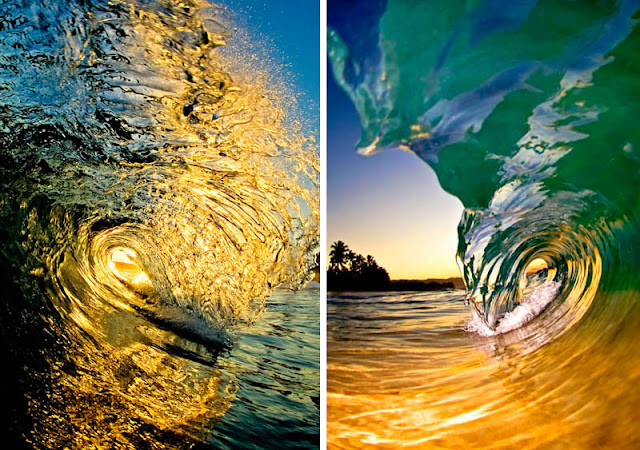 (all images copyright Clark Little via DRB) (all images copyright Clark Little via DRB)Clark Little is pretty well known today as the foremost shore break art photographer (his art has been seen on "Good Morning America", and featured in a number of glossy magazines all over the world). But as much as we like the fantastic shots of various wave' innards, we are even more impressed to see him pitched against dangerous, massive amounts of water - violent waves, where you only have a moment to make that shot and to get out of the harm's way. Into the Vortex!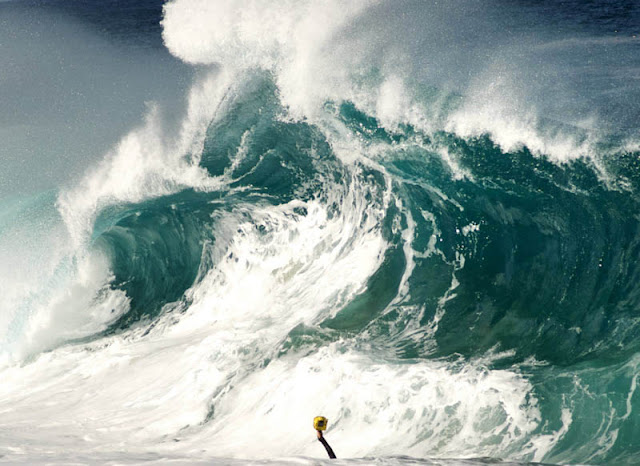 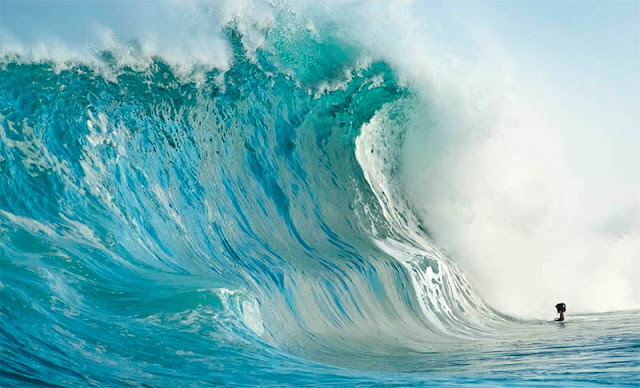  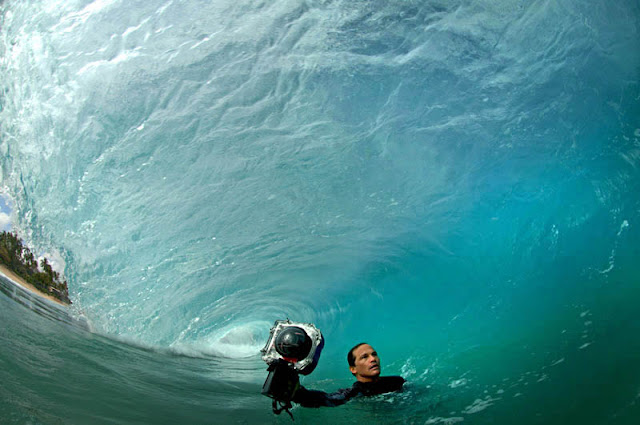 (Clark with his camera "inside" and "under" the waves) (Clark with his camera "inside" and "under" the waves)Encounter with a Wave (almost alien-like in intensity, if you ask me): 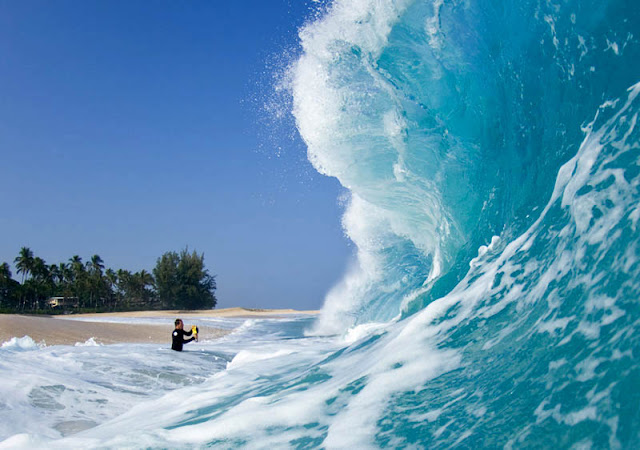 The Result: Out of This World The Result: Out of This WorldA glorious, almost Mandelbrot-like complexity is simply striking in this "Glitter" photograph (our favorite): 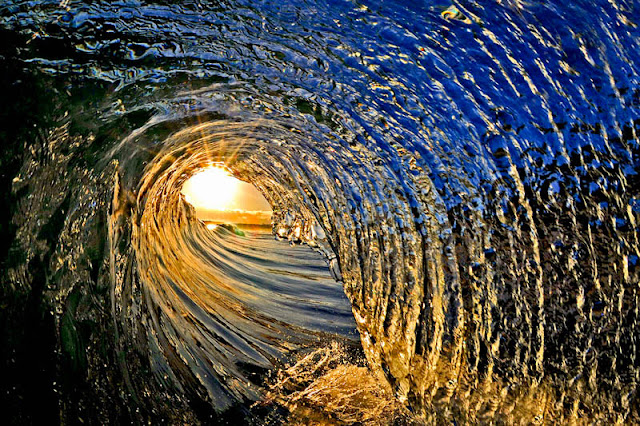 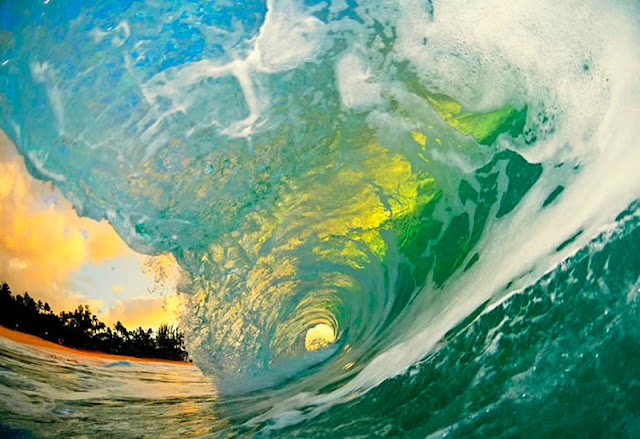 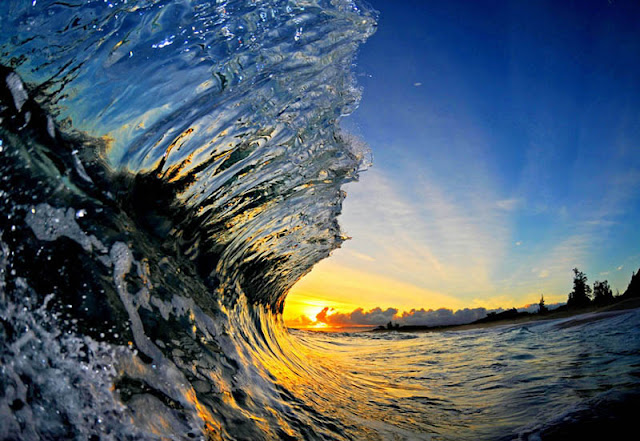 Unusual, over-saturated colors show up inside crystal clear waves, reflecting kaleidoscopic world around them: 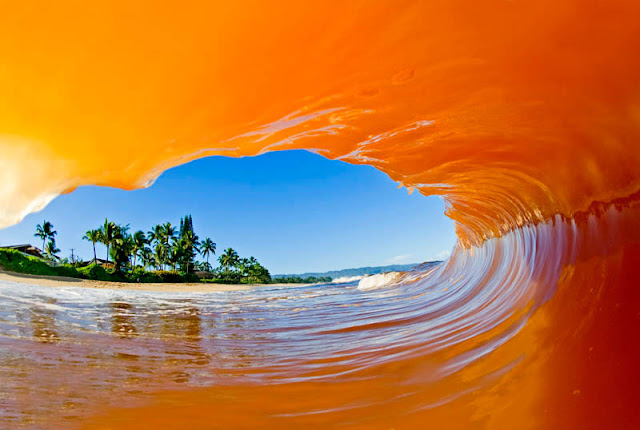  There is also a place for pure abstraction, even psychedelic touches: 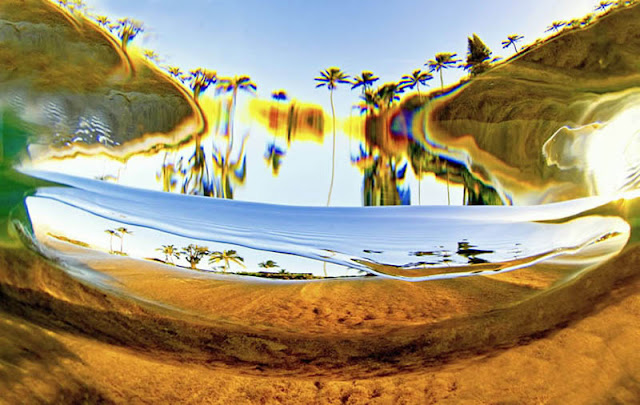 This image is titled "The Twelve Disciples" - see if you can spot some faces inside that wave, too: 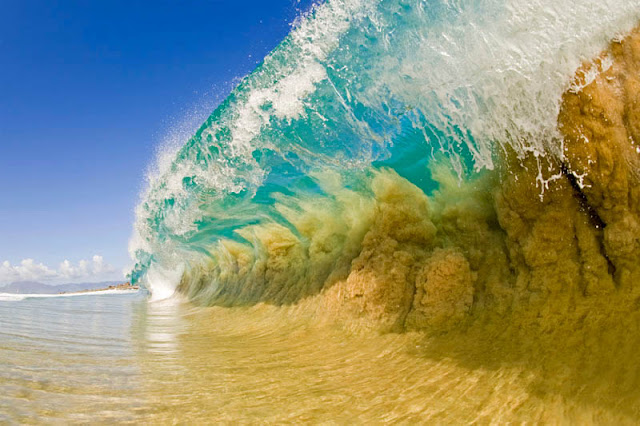 Here is perhaps his most famous image: the wave's "mohawk", an amazingly colorful splash, featured recently inside National Geographic magazine: 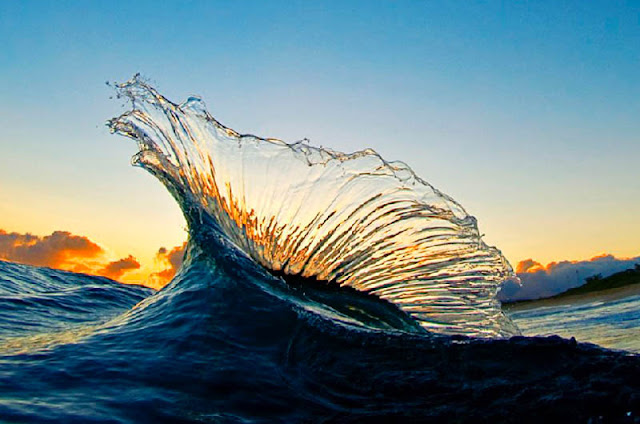 Another singular splash:  Inside the belly of the beast: "The Twister" photograph shows what a violent wave is made of - 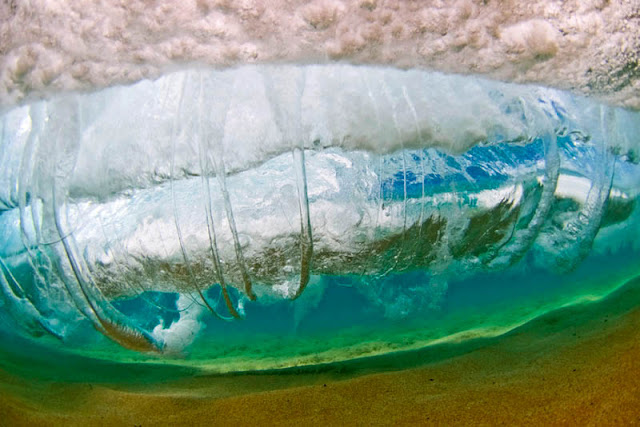 Even in the absence of killer monster waves, the shorebreak art can look slightly alien... Here is the little "Frosty" guy: 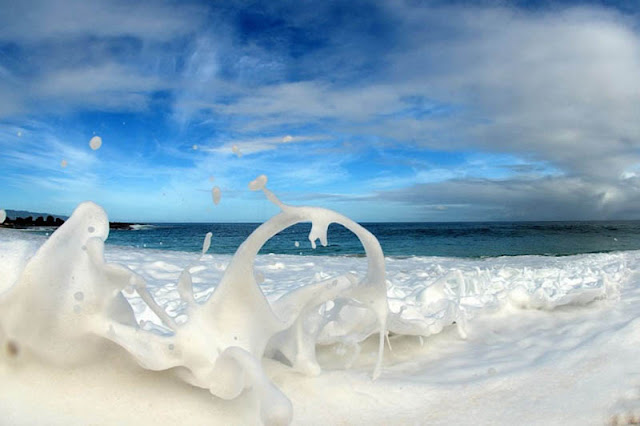 (all images copyright Clark Little (all images copyright Clark Little
10 Best Selling Books of All Time Long before the human being learnt the art of reading and writing, all the knowledge used to passed on from person to person and from generation to generation by word of mouth. The most popular form of communication since ancient times has been story-telling. Initially, even the religious knowledge used to be passed on in the form of stories only. That is how religious books like The Bible, the Bhagavad Gita and so on were preserved from generation to generation. After the invention of paper and printing press, the trend of printing such stories came into existence. Due to the popularity of the religious scriptures, their circulation was so immense, it is literally impossible to keep a track of all the copies circulated worldwide. There are other books written by famous authors at different times which have attained tremendous popularity due to their content and style of presentation. Here are the Top 10 best-selling single-series books of all time. 
1) A tale of two cities (200 million copies sold) 
This phenomenon was written by Charles Dickens and was first published in 1859. The book describes the way of life in two cities, London and Paris, before and after the French revolution. The novel represents the dilemmas of the peasants of French as they are demoralized by the French aristocracy in the years before the revolution. It also talks about the matching cruelty shown by the revolutionaries towards the former aristocrats during the revolution. It compares unappealing social traditions of Paris with London during the same period. The book was published in English.
2) Le Petit Prince (The Little Prince) (200 million copies sold)
 The little prince is the most read and translated book in the French language. Translated into more than 250 languages and dialects, it is the most famous work of the French aristocrat writer, poet and aviator Antoine de Saint-Exupéry. It’s about a delightful little prince who sets off on a journey across all the planets so see if he can find a friend. He has no luck until he falls to Earth. It was first published in 1943. 3) The Lord of the Rings (150 million copies sold) 
Written by English philologist and University of Oxford professor J.R.R Tolkien, the Lord of the Rings was actually written as a sequel to his earlier novel, the Hobbit. It was written in stages between 1937 and 1949. It is one of the greatest trilogies every written. The book is based on the struggle for the Ring of Power, which was forged by Sauron, the Dark Lord, a long time ago. 4) The Hobbit (100 million copies sold) 
The hobbit is a children’s fantasy novel that was published in 1937. It is again written by J.R.R Tolkien. It plot is about a band of Dwarfs who’s treasure has been stolen by a dragon called Smaug. Gandalf, the wizard, persuades Bilbo Baggins, a hobbit, into going with them to get the treasure back. The encounter many adventures along the way. 5) Hong lou meng (Dream of the Red Chamber) (100 million copies sold) 
The Dream of the Red Chamber or The Story of the Stone as its commonly called, is written by novelist Cao Xueqin. It was composed in the middle of the 18th century and is one of China’s Four Great Classical Novels. This book describes the rise and fall of the Qing Dynasty. It is believed to be semi-autobiographical as the author also talks about his own family in the process. 6) And Then There Were None (100 million copies sold) 
This book is not only Agatha Christine’s best-selling novel but is also the world’s best-selling mystery ever. It was first published in the United Kingdom in 1939 under the title Ten Title Niggers. Due to controversies, the title was changed a few times and finally it came to be known as And Then There Were None. In the novel, ten people who are involved in the death of others but have managed to evade notice or punishment are cleverly persuaded to visit an island. These guests are the only people on the island and each of them is murdered in a pattern resembling the old nursery rhyme, Ten Little Indians. 7) The Lion, the Witch and the Wardrobe (85 million copies sold) 
Composed by C.S.Lewis in 1950, this is a fantasy novel written for children. It has also been published in 47 different foreign languages. The novel is set in World War II. In it, four children travel through a wardrobe to the land of Narnia and find out what it is their destiny to free it with the guidance of a mystical lion. 8) She (83 million copies sold) 
This story is written in the first-person narrative by Henry Rider Haggard in 1887. It follows the journey of Horace Holly and his charge Leo Vincey to a lost kingdom in the African interior. There they run into a primitive race of natives and a mysterious white queen. It has been translated into 44 different languages. 9) The Da Vinci Code (80 million copies sold) 
Written by Dan Brown in 2003, this mystery novel created a world-wide sensation. The book begins with the investigation of a murder. Symbologist Robert Langdon and Sophie Neveu are called to Louvre Museum in Paris where they discover that there is a battle going on between the Priory of Sion and Opus Dei. This is taking place over the possibility of Jesus having been married to Mary Magdalene. It is mystery novel that created immense controversy. 10) Think and Grow Rich (70 million copies sold) 
This is a self-help book designed to motivate people and aid their personal development. Do not be misled by the title of this book. The philosophy taught in the book can be used to help people succeed in all lines of work. It was written by Napoleon Hill in 1937

Something particularly unique is happening in South America. I only recently learned of Jose Mujica, a remarkable man who became president of Uruguay in 2009. (Credit: Embajada de los Estados Unidos en Uruguay via Flickr)
By David Suzuki
When bright young idealists share their environmental concerns with me, I encourage them to get involved in politics. That's where decisions have to be made about the severe ecological problems we face. Subscribe to Science Matters Have you noticed, though, how often idealism gives way to a sense of entitlement to all the perks that come with political office? It's amazing how being elected to serve the people is often turned on its head: we're expected to support elected leaders without protest or question. And what happens to many who leave government? Lucrative board memberships and business deals. Some politicians take a different road, though. Former U.S. President Jimmy Carter stepped down after one term, was roundly ridiculed by popular media, yet continued to dedicate his life to promoting justice and eliminating poverty around the world. Nelson Mandela is another incredible role model who sets a high bar. But something particularly unique is happening in South America. I only recently learned of Jose Mujica, a remarkable man who became president of Uruguay in 2009. He's a radical activist who, in the 1960s, joined the left-wing guerrilla group known as Tupamaros, formed by sugar-cane workers and students. The organization was crushed after a military coup in 1973. Mujica was shot six times and imprisoned for 14 years; he claims incarceration solidified his thinking. In 1985, constitutional democracy was restored to Uruguay and Mujica was released. He ran for office and was elected president in 2009. And what a politician! He's a vegetarian who lives in his wife's ramshackle farmhouse where they work together in the fields growing flowers. He turned down the opportunity to move into the presidential palace in Montevideo, preferring to stay on the farm, which is linked to the capital city by a dirt road. Under Uruguay's law, elected officials must declare their personal wealth. In 2010, Mujica's was $1,800, the value of the 1987 Volkswagen beetle he drives. When he added a share of his wife's assets — her house, land and tractor — it brought his declared family wealth to $215,000. Mujica receives $12,000 a month as president but donates 90 per cent of it to the poor and small businesses. "I can live well with what I have," he says. "I'm called 'the poorest president', but I don't feel poor. Poor people are those who only work to try to keep an expensive lifestyle, and always want more and more." He added, "This is a matter of freedom. If you don't have many possessions then you don't need to work all your life like a slave to sustain them, and therefore you have more time for yourself. I may appear to be an eccentric old man... But this is a free choice." Mujica attended Rio+20, the United Nations Conference on Sustainable Development, in June 2012, where he stated: "We've been talking all afternoon about sustainable development — to get the masses out of poverty. But what are we thinking? Do we want the model of development and consumption of the rich countries? I ask you now: What would happen to this planet if Indians would have the same proportion of cars per household as Germans? How much oxygen would we have left? Does this planet have enough resources so seven or eight billion can have the same level of consumption and waste that today is seen in rich societies? It is this level of hyper-consumption that is harming our planet." Mujica says most world leaders have a "blind obsession to achieve growth with consumption, as if the contrary would mean the end of the world." He's hit a bit of a bump in popularity, dropping below 50 per cent for refusing to veto a bill legalizing abortion before 12 weeks (as all his predecessors did) and supporting a debate on legalization of marijuana use that would give the state a monopoly over its trade. Mujica points out: "Consumption of cannabis is not the most worrying thing; drug-dealing is the real problem." Mujica isn't worried about the drop in popularity. It's part of politics, and besides, he's 77 and can't run again in 2014. He's a good role model with wise, enduring values, and an inspiration for people around the world
Mujica and Peña Nieto share a moment on Mexico's presidential plane the TP-01. (Photo: Presidencia de la Republica, Mexico)
Uruguayan President Jose Mujica at his office in the government house in Montevideo, on September 5, 2012, during an exclusive interview given to AFP. Mujica has been an outspoken advocate for the legalization of Marijuana in Uruguay, which he sees as a way to decrease drug related violence. (Miguel Rojo/AFP/Getty Images
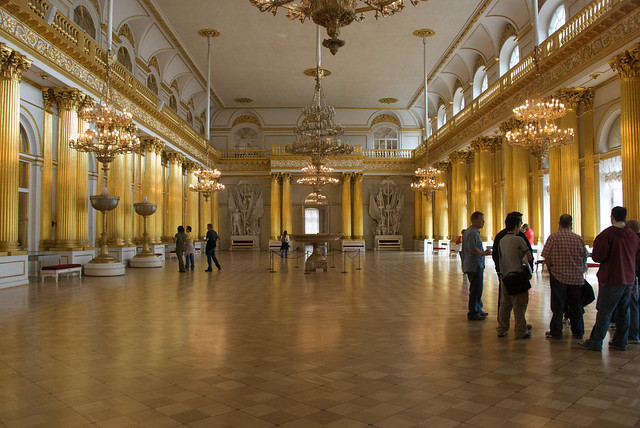
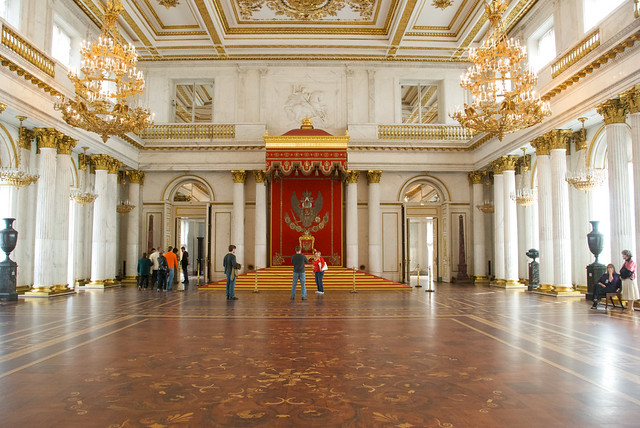
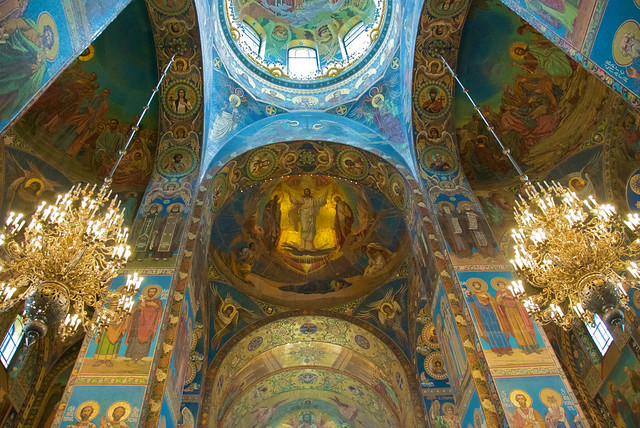
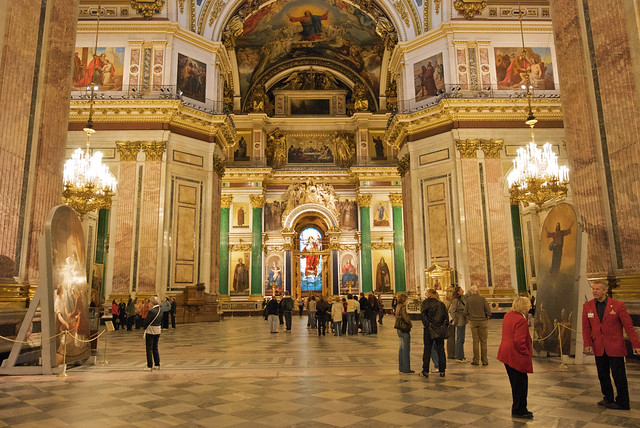
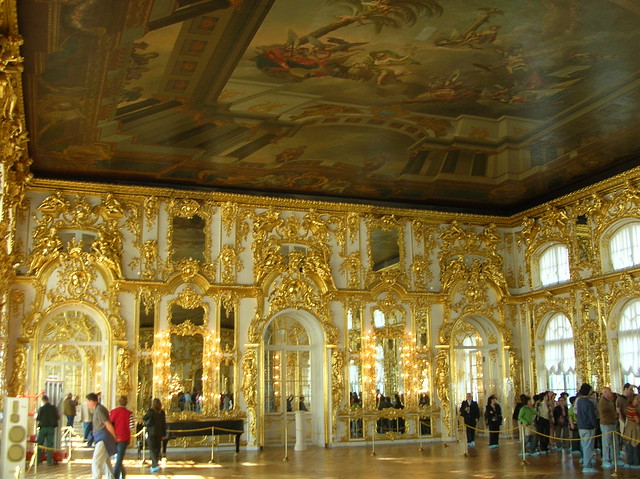
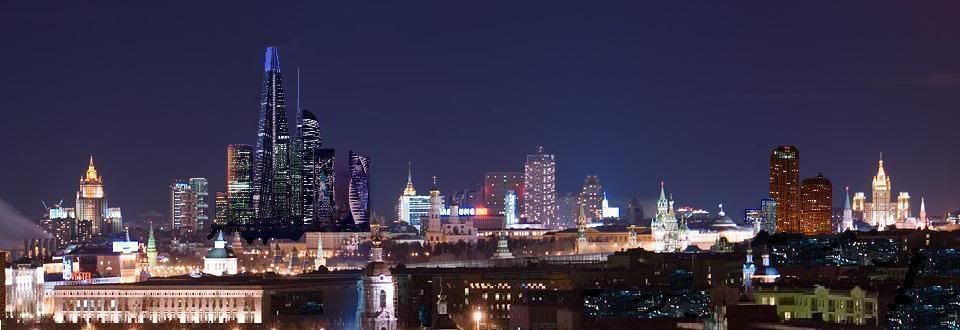
Foto: St. Basil's,Moskou:http://moscow.arounder.com/en/city-tour/red-square.html The World Tourism Organisation views Russia as a country with great potential for tourism development. Russia, a county that spans 11 timezones and two continents, is the largest country on earth. Within this gigantic region lie the volcanosand geysers of Kamchatka, the Altai and snow-capped Caucasus mountains, the Siberian taiga, lake Baikal, the beatiful Volga and the Golden Ring. Combined with her art, architecture and culture, Russia is the place where the dreams of any adventurous traveller come true!The world has no idea how fantastic Russia is. 1] http://www.360cities.net/image/2009-filtered-2#0.00,0.00,70.0 2] http://www.360cities.net/image/palace_square#0.00,0.00,70.0 3] http://www.360cities.net/image/jan-jack#119.31,-6.58,70.0 4] http://www.360cities.net/area/moscow-russia 5] http://www.360cities.net/image/the-international-night-of-museums-pokrovsky-cathedral-moscow#56.90,-36.60,75.3 6] http://www.360cities.net/image/the-international-night-of-museums-pokrovsky-cathedral-moscow#56.90,-36.60,75.3 7]  http://www.shutterstock.com/language.nl/s/Petersburg/search.html Saint Petersburg/Sankt-Peterburg; is Russia's second largest city, with a population of 4.7 million perched at the eastern tip of of the Baltic Sea and the Neva River. The city was formerly known as Petrograd, and later Leningrad. This is one of the most breathtakingly beautiful places on earth, and virtually any building in thelarge historic center, threaded with canals dotted with baroque bridges, can be considered an attraction—and indeed, it is a UNESCO World Heritage site. This is a magical city, with a long list of major attractions. Its Hermitage Museum, housed in the Winter Palace of the Romanov Dynasty, is both one of the world's greatest and oldest collections of art, treasure, and antiquities, and one of its most beautiful buildings. http://www.flickr.com/photos/riarotscheidt/sets/72157607201104238/with/2862037589/ http://www.shutterstock.com/language.nl/s/Petersburg/search.html Saint Petersburg/Sankt-Peterburg; is Russia's second largest city, with a population of 4.7 million perched at the eastern tip of of the Baltic Sea and the Neva River. The city was formerly known as Petrograd, and later Leningrad. This is one of the most breathtakingly beautiful places on earth, and virtually any building in thelarge historic center, threaded with canals dotted with baroque bridges, can be considered an attraction—and indeed, it is a UNESCO World Heritage site. This is a magical city, with a long list of major attractions. Its Hermitage Museum, housed in the Winter Palace of the Romanov Dynasty, is both one of the world's greatest and oldest collections of art, treasure, and antiquities, and one of its most beautiful buildings. http://www.flickr.com/photos/riarotscheidt/sets/72157607201104238/with/2862037589/ http://www.youtube.com/watch?feature=player_embedded&v=RRDrue5fqxA#! http://www.youtube.com/watch?feature=player_embedded&v=RRDrue5fqxA#!    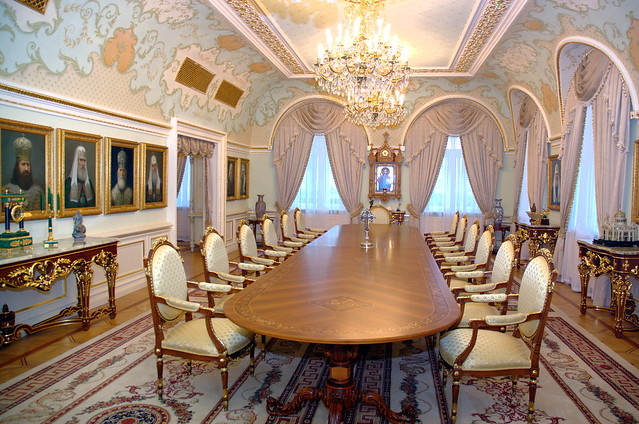 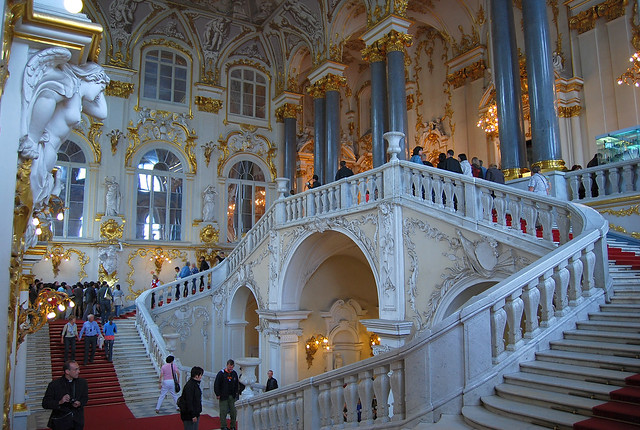
ST PETERSBURG WALLPAPERS;:       
 Assaig-Assajant a la Filharmonia Xostakòvitx, Sant Petersburg Assaig-Assajant a la Filharmonia Xostakòvitx, Sant Petersburg
The 15 Most Beautiful Flowers In The World CannaCannas not only feature pretty blossoms, but also beautiful leaves (often likened to that of the banana plant) that come in a variety of stunning colors. Popularized in Victorian times, Cannas are popular garden plants. Cherry BlossomThe unofficial flower of Japan, the spectacular display of blossoms that arrive in the spring are celebrated by festivals both in Japan and the U.S. The most popular colors are white and pink. They are beautiful while on the trees and remain a stunning sight even after carpeting the ground. Colorado ColumbineGrowing high in the Rocky Mountains, the Colorado Columbine is a welcome reward for the enterprising climbers of Colorado's 14,000-foot high mountains. Picking one in the wild carries a fine ($5-$50 depending on the Ranger who catches you)! HydrangeaMagical snowball puffs in fall: gorgeous. The clusters of star-shaped blossoms, often found in delicate pastel hues, embody innocence. They are popular in wedding bouquets and as garden flowers. Lily of the ValleyA delicate and fragrant sign of spring, the Lily of the Valley has inspired a number of legends. One such Christian legend explains that the tears that Mary shed at the cross turned to Lilies of the Valley, prompting the flower to sometimes be referred to as "Our Lady's Tears." Another legend tells of Lilies of the Valley springing from the blood of St. George during his battle with the dragon.Calla LilyWhile visually stunning and elegant, this beautiful flower is actually a member the poisonous species, Zantedeschia. All parts of the plant are highly toxic, with the capability to kill livestock and children if ingested. Black Eyed SusanThe black eyed susan, a cheerful wildflower, is a perennial that serves as a beautiful back drop in any garden. The contrast of the bright gold yellow petals and dark middle makes it any easy one to spot and recognize. This official drink of the Preakness stakes horse race is named after this flower, consisting of 2 parts Bourbon whiskey, 1 part citrus vodka, 3 parts sweet & sour mix, one part orange juice and garnished with orange and a cocktail cherry.Bleeding HeartThese whimsical, almost fairy-like blossoms are a traditional favorite in shady gardens. The flowers are either red, pink or white and appear in April-June.Blue BellsIn spring, many European woods are covered by dense carpets of this flower; these are commonly referred to as "bluebell woods". It is thought that they were named by the romantic poets of the 19th century, who felt they symbolized solitude and regret.LantanaThese delicate flowers, with their pink and yellow petals, are butterfly magnets. The bush can grow to be quite large and the color of the petals change as the plant ages. Beware - Lantana is considered a weed by many that is quite difficult to get rid of.RoseRoses are one of the most romantic and wonderfully scented of flowers. The giving of roses is steeped in tradition and cultural meaning, from the yellow rose of friendship to the deep red rose of true love. Oriental PoppyThis perennial poppy has a delicate and striking color. After flowering in the spring, their foliage dies back entirely, only to grow new leaves once again with the autumn rains. The Oriental Poppy is the flower of The Wizard of Oz. Mussaenda erythrophylla (Ashanti Blood, Red Flag Bush, Tropical Dogwood)These plants are native to the Old World tropics, from West Africa through the Indian sub-continent, Southeast Asia and into southern China. The beautiful red and yellow petals are a real showstopper. A favorite of not only of gardeners, but also butterflies, bees and hummingbirds. BegoniaThe first Begonia was introduced into England in 1777. Now one of the most popular flowers grown in the United States, Begonias are prized for their flowers as well as their leaves. This versatile plant can be grown either inside or out. IxoraIxora flowers, also commonly called West Indian Jasmine, are often used in Hindu worship, as well as in Indian folk medicine. This plant has traditionally been associated with enhanced sexuality and the re-kindling of passion. Who wouldn't want that as a gift! DendrobiumDendrobium is a large genus of tropical orchids that include over a thousand species. The sprays of flowers are so delicate and yet so perfectly formed, they appear magical.
After ice rain in South China
Vittoria Amati photographs the marine life around the coral reefs of Sulawesi, Indonesia These underwater photos offer a unique glimpse of the sea - they have been turned into negatives. British photographer Vittoria Amati, 54, transformed her photographs using computer software to appear like x-rays. Above a black-saddled sharpnose fishThe photographs taken up to 30 metres below the surface at the Bunaken Marine Park, North Sulawesi, Indonesia reveal creatures such as coral, fish and crabs in stunning detail. (Star fish, Gomophia watsoni)Vittoria accidently turned one of her underwater photographs into a negative and, pleased with the transformation, decided to do the same with her collection of 45 images. (Banggai cardinal fish)Vittoria, from London, said: "I stumbled across a negative version of one of my images and became really excited - they had the power to trigger the imagination. I was stunned, it was as if I was looking at my photos for the first time." (Sea anemone)"I used photo editing software to turn the images into negatives, then worked on changing the colours layer by layer. I needed to restrain myself to keep the effect 'natural'. If the viewer is used to see a coral red I turned it into blue, making things opposite." (A strap-weed filefish, Pseudomonacanthus macrurus)"There was the odd problem," explains Vittoria, "the first time I went diving I forgot to take the lens off my camera, but eventually everything came together." (Echinothrix calamaris)(Red soft coral and brittlestar) The images were taken mainly during the day but also at night when a lot of life comes out feeling more protected by the dark. (A Nembrotha species) "Swimming with fish is incredibly pleasant, there is an extraordinary beauty hidden under the waves." (Coral grouper) "The aim is to show people how beautiful every marine organism is, even the tiniest. The sea is not only about big fish and mammals like whales, sharks and dolphins. The sea is an environment very rich in biodiversity." (Sea urchin, Diademasavignyi)
World's Biggest Airplanes : Huge Aviation
For a few thousand years the biggest things in the skies were only in our imaginations, flying figments of myth and fable: the Roc from Sinbad’s tales, the Garuda bird from the Mahabharata, the Thunderbird from North America, the Brazilian Blue Crow, and other high-flying nightmares or soaring benevolent gods and spirits. Sputtering, Creaking, Terrifying MonstersThe Wright Brothers are often given most of the recognition for the first powered flight but Gustave Whitehead, Alexander Feodorovich Mozhaiski, Clement Ader, and many others should get a share of the fame, too. Whoever is responsible, it wasn’t long before the skies were full of sputtering, creaking, and – for the most part – very unreliable aeronautical devices. 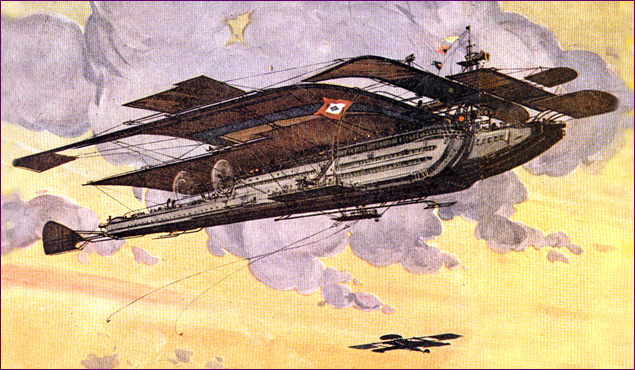 (futuristic art by Harry Grant Dart) (futuristic art by Harry Grant Dart)It took the first world war to change aircraft from a killing and maiming hobby for the rich to a killing and maiming war machine. War helped advance the science of flight and necessitated bigger planes. One monster plane of that time was Igor Sikorsky's Ilya Murometz, a huge improvement over his legendary Russky Vitaz, the first four engine aircraft. But the Ilya Murometz didn't begin as a beast of the skies. Originally designed as a luxurious passenger liner featuring electric lighting, heat, a bathroom, and even a glass floor, the bomber must have been amusing as well as terrifying to its wealthy passengers. 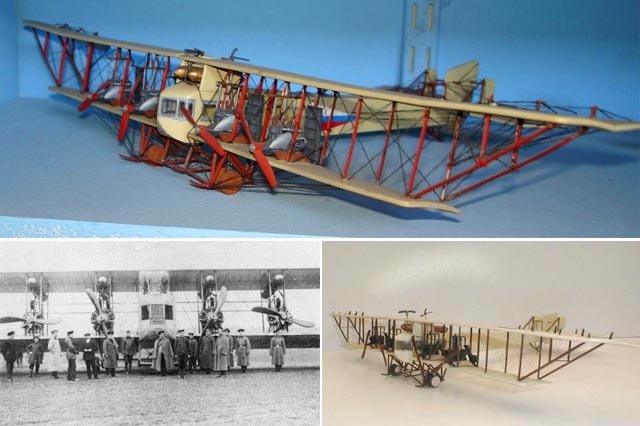 (images credit: histarmar.com.ar) (images credit: histarmar.com.ar)Another iteration of such approach was Tupolev ANT-20 "Maxim Gorky": 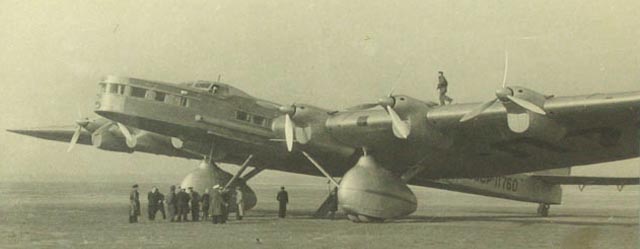 And a really huge Russian monster plane from the early 1930s: Ka-7 (more info), named after engineer Kalinin, not the famous political figure.   (images via Modelist-Konstruktor, 1989)Art and Elegance Between Wars (images via Modelist-Konstruktor, 1989)Art and Elegance Between WarsIn the years between wars, airplanes kept getting bigger. Outrageous concepts like Norman Bel Geddes Airliner Number 4 appeared, featuring 9 decks of luxury hotel accommodation, bars and engine rooms:   It would sleep 606 passenger in comfort, easily bringing them across Atlantic. More images and info about Bel Geddes fantastic dream planes are here. It seems to be a logical development of 1910s British Airliner of the Future:  (image via) (image via)Don't miss also this "Freak of the Month" concept from Modern Mechanics, 1931:  (image credit: modernmechanix) (image credit: modernmechanix)But let us get back from aviation dreams to reality. Take the elegant Handley Page HP42, for instance: a four-engined beauty with an impressive track record of no crashes while being used as an airliner -- which gives you an idea of how safe it was to fly back then. 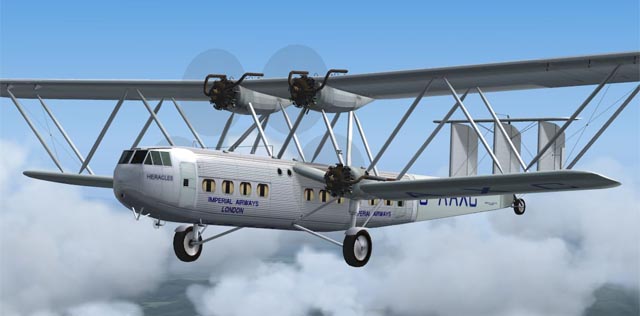  (images via) (images via)One of the larger and more beautiful aircraft in the next few decades was the awesome 1936 Boeing Stratoliner. Unfairly called a ‘whale’ because of its chubbiness, the plane was not only huge but also state of the art; today we enjoy flying in pressurized comfort because of technology premiered in the silver flying fish of the Stratoliner. 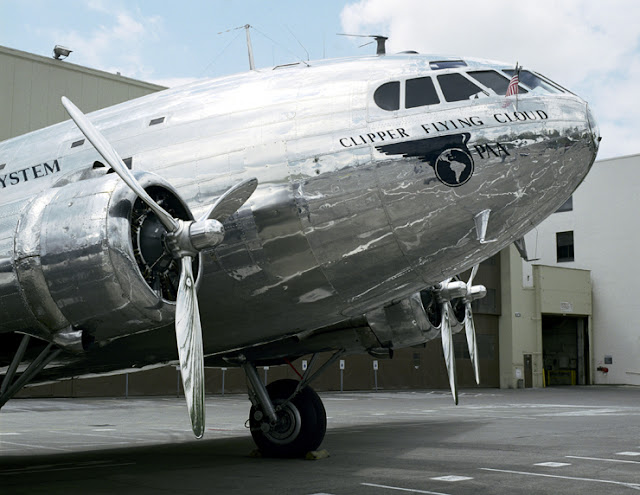 Another aircraft both immense and legendary - The H-4 Hercules. Arguably the standard by which “huge aircraft†are measured –- as well as how "completely screwed up" is defined. Its one and only flight was in 1947, where it flew for around a mile, reaching altitude of 70 feet. Originally planned as the ultimate military transport, it is more commonly known as its hated -- at least by its creator Howard Hughes -- moniker, the Spruce Goose. 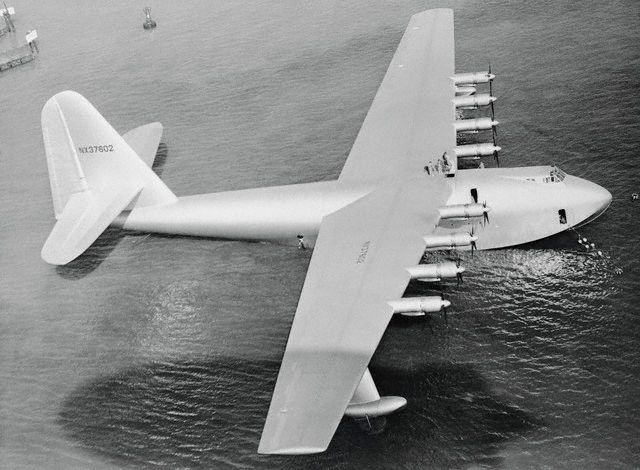 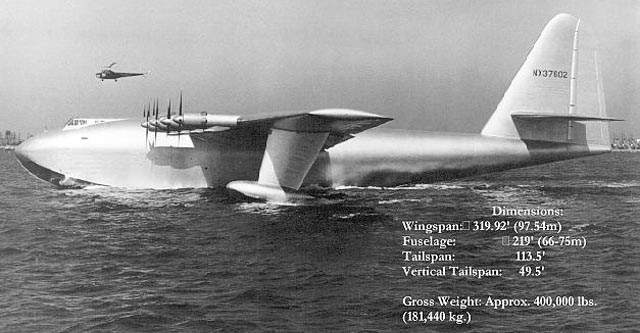 (image credit: Bettman/CORBIS) (image credit: Bettman/CORBIS)The aircraft had originally been ordered by the US government during World War II as a giant cargo plane for the armed troops and tanks. Howard Hughes's creation was the world's largest plane at the time and is still the largest flying boat ever built. It also holds records for the largest wingspan at 97.5 meters, tallest airplane at 24.2 meters, and the largest aircraft ever made from wood. 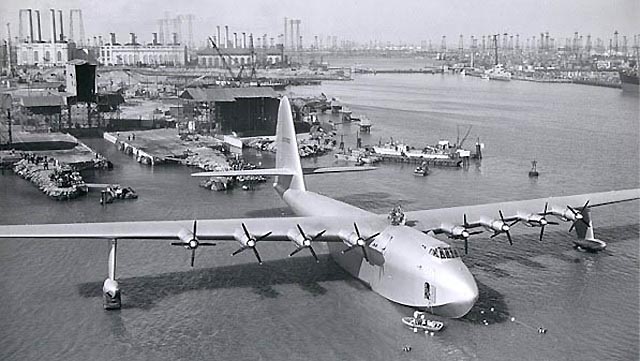 Nazi's Ugly Brute Nazi's Ugly BruteArt and elegance may have been one of the early fatalities in the second world war, but striving to have the biggest (anything) certainly wasn’t. 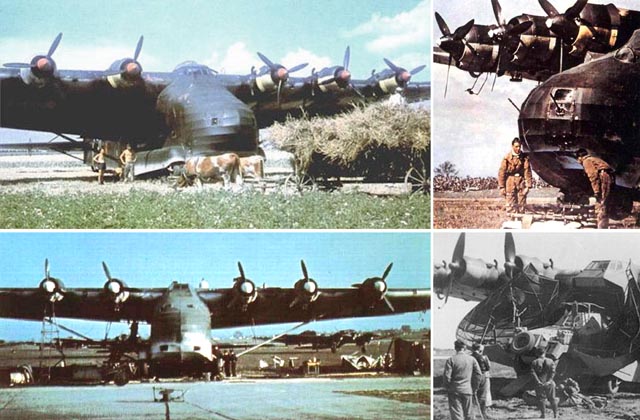 To call the Messerschmitt Me 321 big is like calling 1939 to 1945 unpleasant. Created originally as a glider, the Gigant could haul an insanely large amount of cargo. And an insane bunch of soldiers: 130 plus hardware ... 23 tons of hardware.  (images via) (images via)Because the Gigant was so huge, getting the damned thing into the air was, at best, problematic. First it was towed up with a pair of Heinkel 111 bombers, which was alternatively unsuccessful or disastrous. Then they tried fusing two 111s together to make a Frankenstein’s monster of a machine –- almost as bestial as the Gigant itself. Finally the Luftwaffe stuck engines on the Me321, which made an ugly brute even uglier but at least it got off the ground. 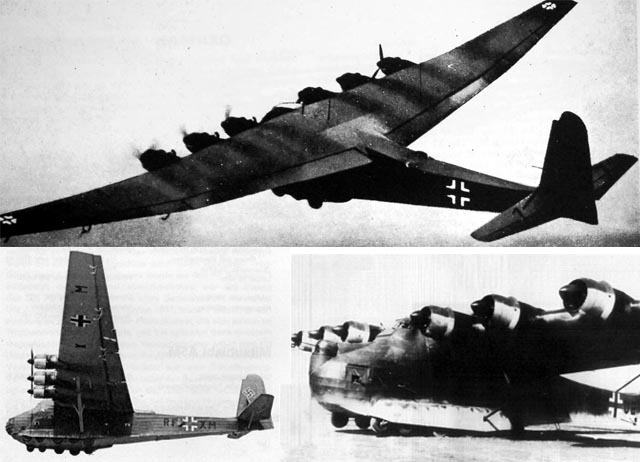 Heavy Bombers of the (Potential) Doomsday Heavy Bombers of the (Potential) DoomsdayOn the other side of the war was an eagle, a silvery steel bird of prey: the huge and beautiful B-29 Superfortress. Although getting the immense B-29 up to its ceiling of 40,000 feet was a struggle, once it got up there nothing could reach it or, at 350 mph, catch it. Even if something managed to come close to it, its formidable defenses could cut any threat to shreds. Featuring many impressive advancements, and some frustrating problems, the plane was kept on active duty long into the Korean war. 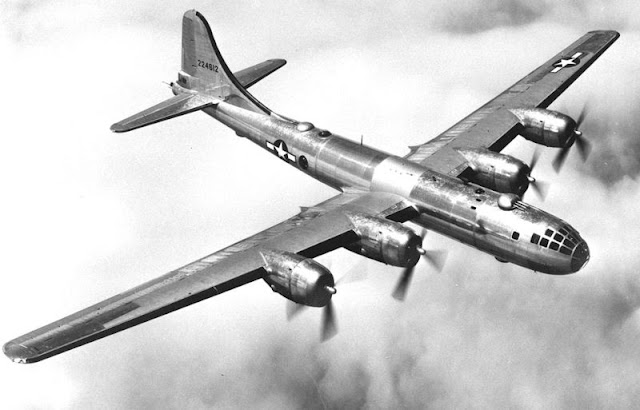 (image via) (image via)With the advent of jet power, aircraft designers began to think really big. Think of your average doomsday film and you immediately picture the roaring ascent of smoke-blasting, eight-engined, B-52 bombers. But before B-52 there was another huge American bomber: Convair B-36 "Peacemaker": 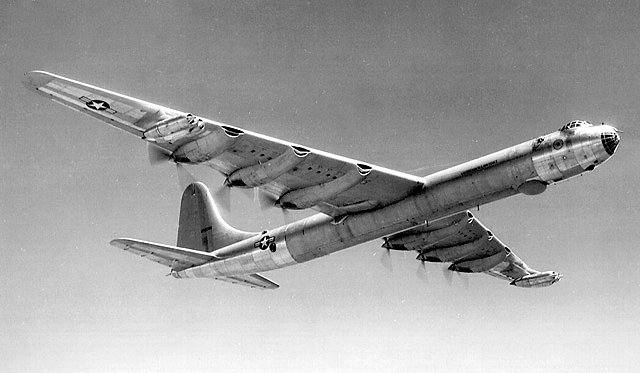  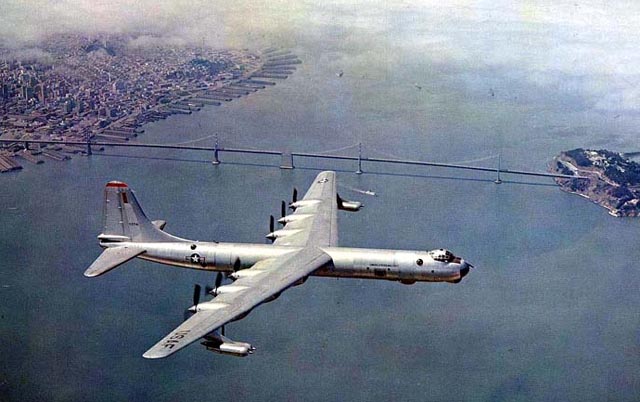 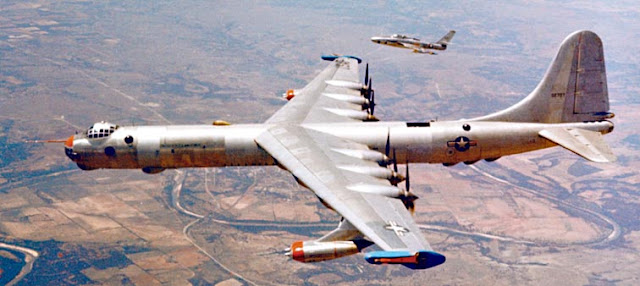 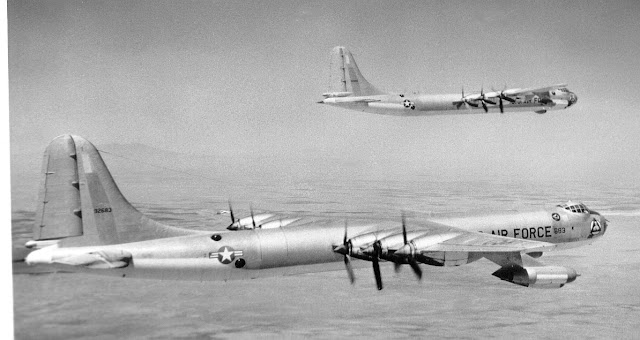 (images via) (images via)Like the B-29, the B-52 "Stratofortress" was an aeronautical powerhouse, a heavy-lifting behemoth. And like the B-52, it was kept in service until … well, they are still being used today. 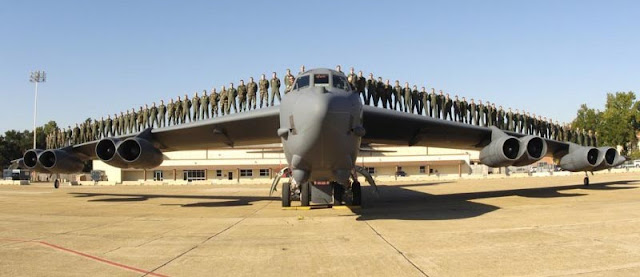 (image source: US Air Force) (image source: US Air Force)Heavy bombers transforming into LEGO pieces in the minds of dazed Cold War engineers: Arthur Kimes writes to us: "Soviets also proposed to stick together a bunch of big airplanes to make a REALLY huge one. Kind of like a Lego dream come true: In the early-mid 1950s the USAF had a plan to link 3 B-36s (wingtip to wingtip) to have a extended range delivery system. When this behemoth got close enough to the Soviet Union each would drop off a parasite fighter-bomber (probably the F-92 - which also was never built) and the released FBs would make a high-speed dash and drop a bomb on their targets. The B-36s would split up and return, the F-92s would have to try and find a friendly airfield in Turkey or something like that." 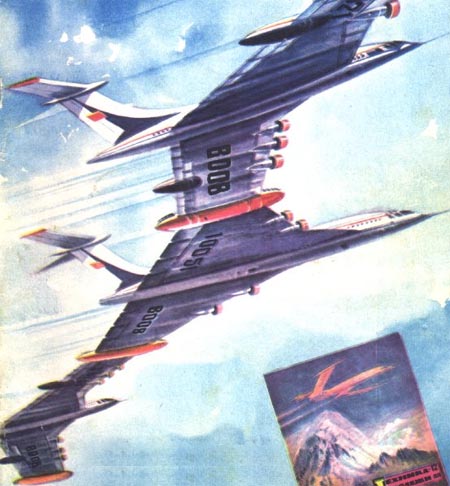 (image source: TM, 1975) (image source: TM, 1975)"When you consider the B-36 is still the largest bomber ever built, the idea of 3 of them flying joined at the wingtips is astounding." The Ugliest Airplane Ever Built?The Aero Spacelines Super Guppy looks more like a prop from a Japanese monster movie than a real airplane. The Guppy is also high on the irony meter as it was mostly used to haul nearly-completed components -- of other airplanes. 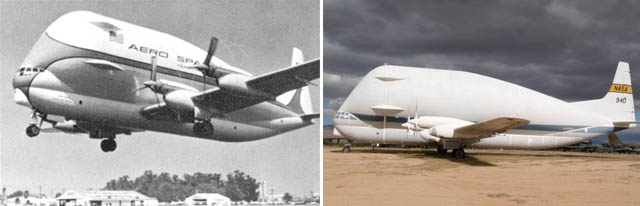   (images credit: Mischa Oordjik, Alastair T. Garoiner) (images credit: Mischa Oordjik, Alastair T. Garoiner)The Airbus A300-600ST (Super Transporter) or Beluga: 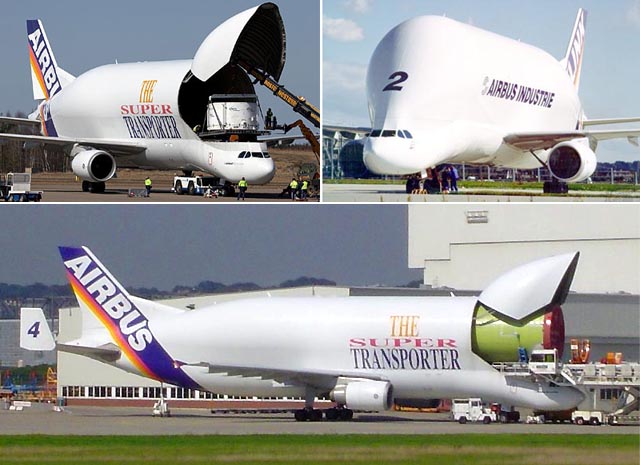 (images via) (images via)Here is a Russian carrier VM-T "Atlant" used in a Buran and Energia space programs, which is perhaps the only airplane capable of carrying on its "shoulders" a load larger and heavier than itself:  (images via) (images via)Transporting a fuel tank for the second stage of Energia rocket:  (image source: "Cosmonautics - A Colorful History" ed. by Dr. Wayne R. Matson)Nuclear-Powered Lockheed Mothership (image source: "Cosmonautics - A Colorful History" ed. by Dr. Wayne R. Matson)Nuclear-Powered Lockheed MothershipNothing comes close in size to this unbelievable concept developed by Lockheed in the 1970s: 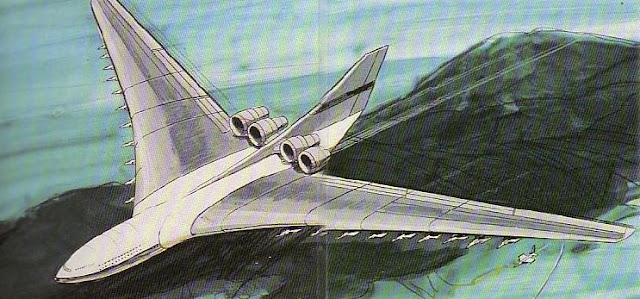 Note small "children" airplanes, attached to its wings... Its hard to imagine anything bigger flying in the skies, still retaining the shape of a common airliner. An aircraft of this size would have to land on water as a titanic "flying boat". The Biggest Planes Flying TodayUnlike the B-29 and the B-52, which don’t show their size easily, the C-5 Galaxy would look insanely monstrous even on a postage stamp. To give you an idea of the Galaxy’s size, its wingspan is not just longer than the Wright Brothers’ first flight but the beast can also haul 180,000 pounds (which is about 90 tons). The C-5 was the world's largest plane when it was introduced in the late 1960s. 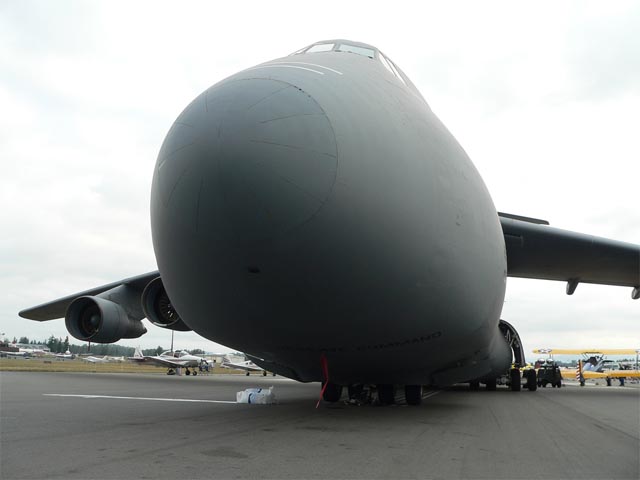 (image credit: Pervez Iqbal) (image credit: Pervez Iqbal) 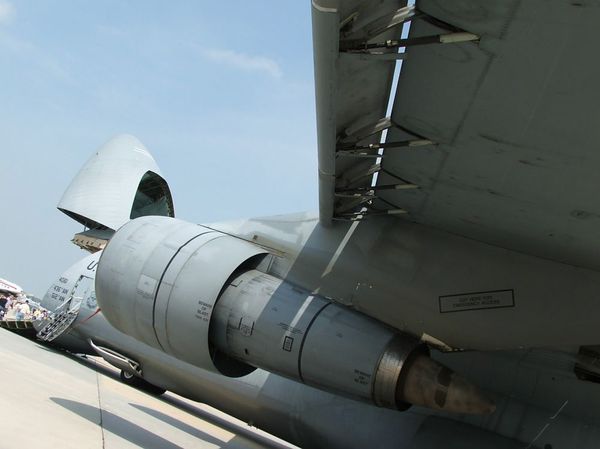 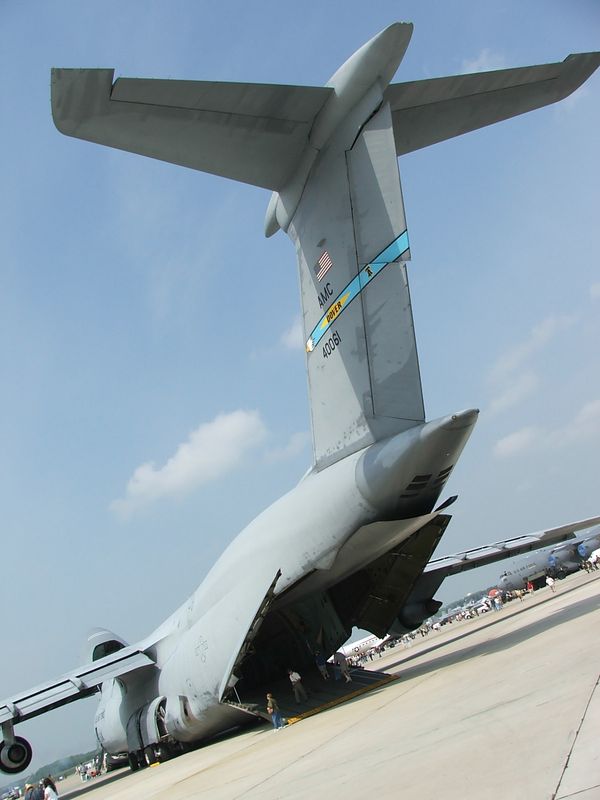 Arguably the biggest plane flying today, or ever, is Antonov An-225, a 6-engine beast that’s not only longer than the first flight in history but could probably carry one, two, or three whole aircraft museums. Numbers don’t mean much but here is an impressive one: the 225 can carry 550,000 pounds, which is 275 tons. Yes, you can say WOW. 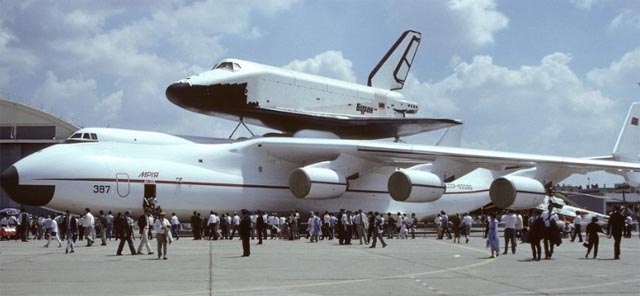  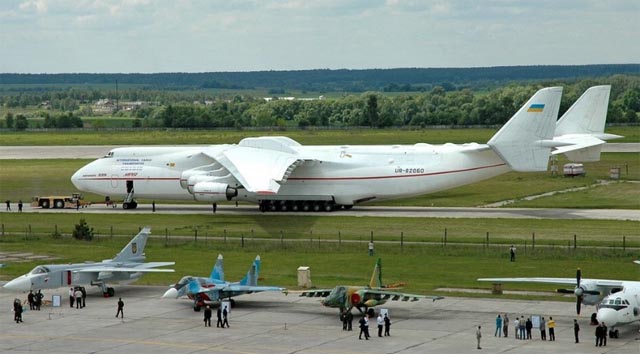 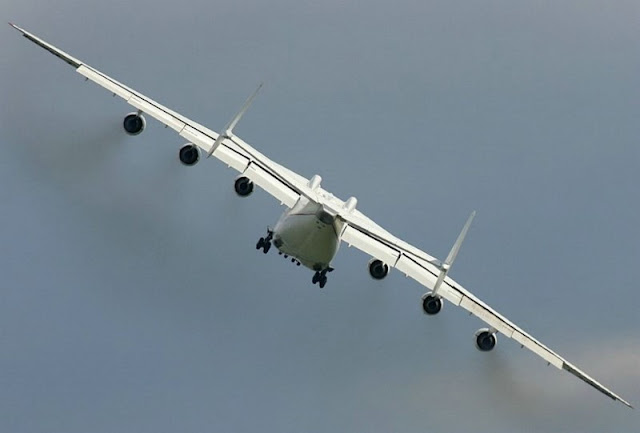 (image credit: Dmitry Pichugin) (image credit: Dmitry Pichugin) (image credit: Radek Oneksiak) (image credit: Radek Oneksiak)
| Page:
|
|
|
|
|
16 |
|
|
|
|
|
|













 Originally Russian, Olga Urashova (2nd from left) was the Dutch Playboy Playmate of the Year 2005


