|
Viewing 352 - 360 out of 370 Blogs.
| Page:
|
|
|
|
|
40 |
|
|
One of Lourdes Sumners’ most vivid memories of her childhood battle with cancer was pining for real food while hooked up to a feeding tube and watching The Food Channel on TV. "It was horrible. I hated it," recalls the now 14-year-old from her home in Duncan, B.C. "That would make me even more hungry. And I would draw pictures of sausages and hamburgers, whatever I felt hungry for." For her parents, that period was highlighted by the distressing and ultimately futile search for a bone marrow donor for their middle daughter, hampered mainly because she happens to be part of the fastest growing demographic in Canada. 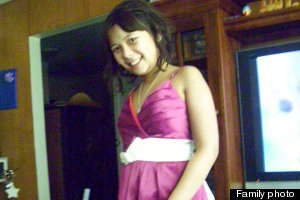 Sumners, whose mother is Filipino and father is Caucasian, is among the more than 340,000 Canadian children growing up in a mixed-race family. Sumners, whose mother is Filipino and father is Caucasian, is among the more than 340,000 Canadian children growing up in a mixed-race family.
Only about four per cent of Canada’s couples are made up of people from different ethnic backgrounds — but they’re growing five times faster than other unions, according to data from the 2006 census. Statistics Canada said mixed couples were most common among Canadians aged 25 to 34, followed by those aged 15 to 24 — a cohort that encompasses Generation Y, which generally refers to young adults born after 1980 (also known as millennials). What hasn’t kept up with the growing population of mixed-race children is the registry of stem cell and marrow donors from blended ethnicities — donors that Sumners needed. She required a bone marrow transplant to fight acute myeloid leukemia, an aggressive cancer of the blood and bone marrow. "It wasn’t even a consideration in my mind that finding bone marrow would be an issue," says Orlando Sumners, Lourdess’ father. "There’s such a desperate need for mixed-race people on the registry ... most mixed-race adults wouldn’t have a clue what we’re talking about." NEEDLE IN A HAYSTACK Compared to organ transplants, bone marrow needs to be genetically similar to the recipient. The chances of finding a marrow match within one’s own family is about 30 per cent, according to OneMatch, Canada’s bone marrow and stem cell registry. Two out of three Caucasians find matches — because worldwide registries, including Canada’s, are predominantly made up of Caucasian donors. In comparison, the odds for a multi-ethnic person are most often compared to a finding a needle in a haystack. Just one per cent of donors on the Canadian registry are of mixed race. Part of the reason are misconceptions about the whole process. Jeff Chiba Sterns, a documentary filmmaker who is part Japanese and European, remembers getting an email to join the registry when a Chinese-Caucasian man was looking for a marrow match several years ago. "I didn’t ever go get tested. It was partially I didn’t know how; I was busy; and to me, it didn’t really make any sense. And life goes on," he said. EASY REGISTRATION But registering is incredibly easy. After filling out a health assessment and consent form, oneMatch mails you a kit. You swab the inside of your cheek to collect a tissue sample and then send it back, postage paid. To actually give stem cells, 80 per cent of donors go through a non-surgical procedure similar to blood donation. Blood is drawn through a needle from your arm into a machine that isolates the stem cells, and the remaining blood is returned back to your body through another needle. Other times, surgery is performed under anesthesia where liquid marrow is extracted from the back of your pelvic bones. The 45-90 minute procedure can leave you with a sore lower back for a few days. The challenges in finding mixed-race donors is the focus of an upcoming documentary called "Mixed Match" by Chiba Stearns. Growing up in Kelowna where "What are you anyway?" was a common question, identity is a big part of the 33-year-old’s work. "It was bad to be different. You felt like an outsider. You really felt like a minority," he recalls. This generation of millennial mixed kids faces a nuanced identity crisis, not only of race, but now also of medicine and social responsibility. 'JUST ABOUT DID LOSE HER' In February 2008, Sumners underwent a double transplant of stem cells from donated umbilical cords. It wasn’t as ideal as bone marrow but time was running out. 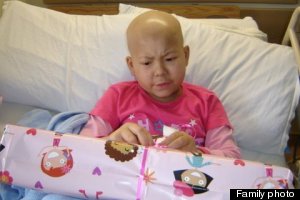 Sumners underwent several rounds of chemotherapy and full body radiation to essentially strip down her immune system. The injection of the donated stem cells took just a few minutes, but the wait to see if her body would accept them took several agonizing months. Sumners underwent several rounds of chemotherapy and full body radiation to essentially strip down her immune system. The injection of the donated stem cells took just a few minutes, but the wait to see if her body would accept them took several agonizing months.
"It was brutal, brutal many months we went with her, if she was going to survive or not survive. And a couple of times we did just about did lose her through the treatment," remembers her dad. Lourdess says: "I only remember how I felt because I was in such pain. I got like blinding headaches and I could barely move." Cord blood from banks in the U.S. and Japan ultimately saved Lourdess’ life. Few parents know about the potential in donating blood from umbilical cords because it’s been the domain of private companies. Canada is finally setting up a public cord blood bank towards the end of 2014. But the treatment worked, and the now Grade 9 student — poised from giving countless interviews — has a simple message about the mixed-race registry: "I hope that people will have a better understanding of it and some kids will not have to wait as long for their treatment. And that people of mixed race will give stem cells and bone marrow and help a child so they don’t have to wait as long." Credit http://www.huffingtonpost.ca/2013/01/31/mixed-race-blood-marrow-donors-gen-y-millennials_n_2570078.html?ir=Canada
How To Save A Dying Relationship In 4 StepsAre you in a relationship in which you still love the other person, but it just feels like it's going nowhere? Are you battling with them on a daily basis? Do you feel like the things your significant other used to give you, you just aren't getting anymore? We live in a disposable society, and it's easy to dispose of and write off a relationship that has hit a few snags. The question is, though, how hard are you really trying to reignite the flame? It takes two to end a relationship. So stop blaming the other person, and start suggesting things to reignite the fire. Here are four things you can do to rekindle a relationship you thought was on the verge of ending: 1. Date Like You Used To Date In The Beginning.
So many couples get into routines. They come home from work, eat dinner, plop down on the sofa to watch some television, and then go to bed. That's just so boring. In the beginning of your relationship, you would have never been attracted to someone who did this. So spend one night a week having a date. For instance, if you used to go out once a week for a night of dinner and bowling, do that. If you used to light candles when you made dinner, then do that. You need to make someone remember why they wanted to be with you, and not why they want to get rid of you. 2. The Kids Will Be All Right For One Night Without You.
A lot of couples blame the kids for ruining their relationship. The truth is that you are the ones who wanted the kids in the first place and, really, kids bring a lot more into the relationship than the death of it. Find time when you can be alone in the house. Whether that means sending the kids for a night at grandma's house or letting them have a sleepover at a friend's house, have adult time when the two of you can just connect with each other without screaming, yelling kids in the background. 3. Be Romantic.
Send your significant other a flirtatious text or email in the middle of the day for no reason. Tease them a little bit. Tell them how much you miss them. Tell them how good it feels to be in a relationship with them. Random compliments in the middle of the day for no reason at all will reignite a romantic spark. Couples tend to forget to flirt with each other, but yet they almost all did it at the beginning of the relationship. You already know how to turn each other on mentally, emotionally and physically. You need to do this, and there is nothing better than getting a random email in the middle of the day expressing a good feeling. 4. Get away for the weekend.
Take a road trip together. Try a new activity together. It doesn't matter if it's dancing, cooking class, learning a sport or something else. It only matters that you learn something together. Doing that will make you ignore the current issues between you, plus it creates something new about which the two of you can talk. It might even give you a new common interest to share. If you're trying to hold onto a relationship and you love that other person, then really give these simple techniques a try before you abandon the relationship. You've held on this long, so why not try these things to see if you can really reconnect? Credit : http://www.huffingtonpost.com/david-wygant/how-to-save-a-relationship_b_2528324.html?ir=women&utm_campaign=013013&utm_medium=email&utm_source=Alert-women&utm_content=FullStory
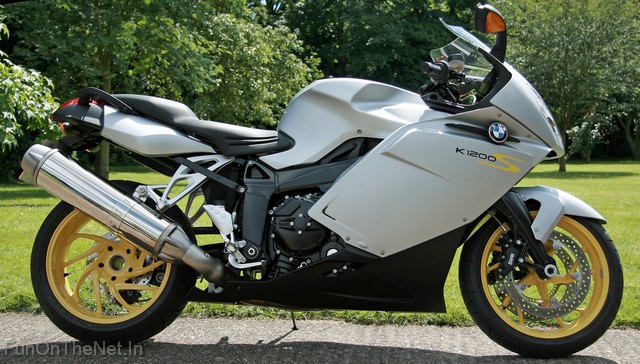
Top 5 Fastest Bikes in the WorldHere is the brand new list of the top 5 fastest bikes in the world! Includes the BMW K1200S, Ducati 1098s, Aprilia RSV 1000R Mille, Yamaha YZF R1, Honda CBR 1100XX, Suzuki Hayabusa, Kawasaki Ninja ZX-14 and the BMW S1000RR ! 
BMW K1200S 167 mhh (268 km/h) (Special Mention) With enough raw power to shock even the most seasoned adrenaline junky, the K 1200 S hurls you from a dead stop to sixty mph in just 2.8 seconds. Once you're over the whiplash, you'll keep climbing, topping out at speeds that run neck-and-neck with the fastest production motorcycles in the world.
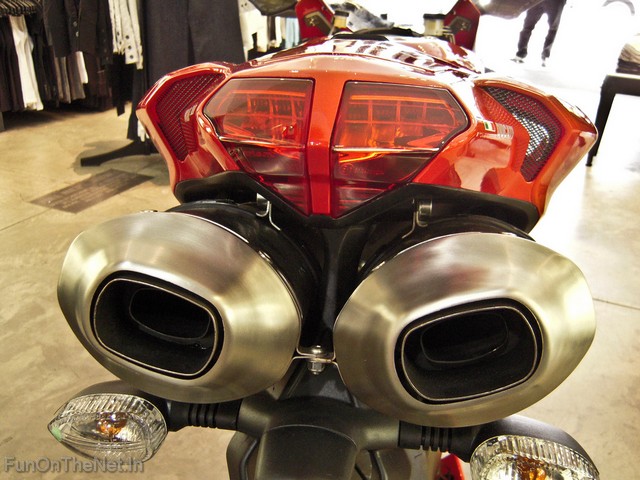
Ducati 1098s 169 mph (271 km/h)
(Special Mention) The Ducati 1098 is a 1099 cc L-twin sport bike manufactured by Ducati. It was announced on November 8, 2006 for the 2007 model year and replaces the 999. The 1098 makes a manufacturer claimed 160 horsepower, 90.4 ft-lb torque, and weighs 173kg. These figures gives the 1098 the highest torque-to-weight ratio of any production sport bike ever made.
Aprilia RSV 1000R Mille 175mph (281 km/h) (Special Mention)
The RSV Mille and limited-edition RSV Mille Factory are high performance V-twin powered motorcycles made by Aprilia with a 143 HP 998 cc engine built by the Austrian company Rotax. For 2006. the RSV Mille Factory won the Maxisport category for Masterbike 2006 and overall Masterbike of the year.
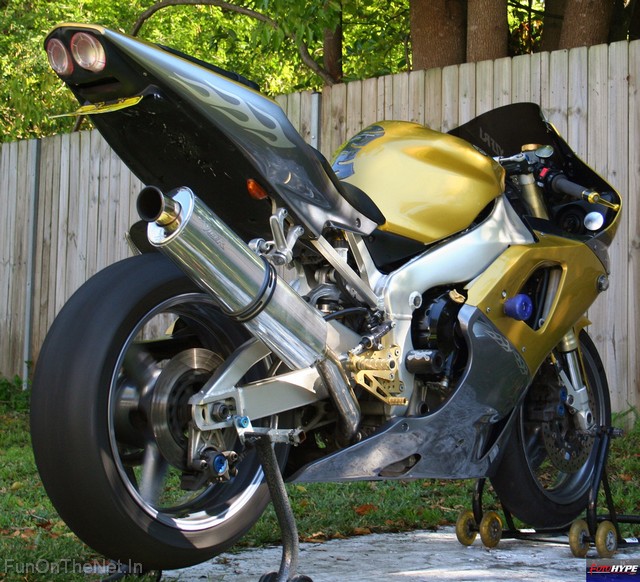
5. Yamaha YZF R1 176mph (283 km/h) The Yamaha YZF-R1 motorcycle, introduced in 1998, was the first significant motorcycle in the true litre class (1,000 cc) "handling arms race" between the Japanese Big Four motorcycle manufacturers (Honda, Kawasaki, Suzuki and Yamaha). When introduced, it took the class closer to a true racing motorcycle, and increased the handling capabilities.
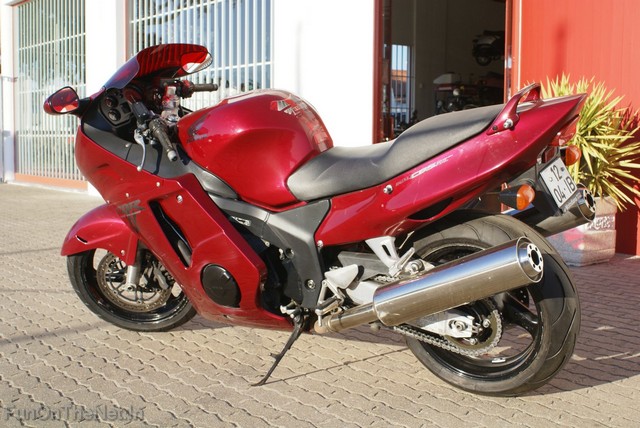
4. Honda CBR 1100XX Super Blackbird 178mph (286 km/h)
Honda CBR 1100 XX Super Blackbird is a sport-touring motorcycle built by Honda. It combines big engine power, Easy operational error-tolerance with touring comfort. The Blackbird production started in 1997 and the last year of production was 2006. The Blackbird was the result of Honda's attempt to build the world's fastest production motorcycle, stealing the crown from Kawasaki.
3. Kawasaki Ninja ZX-14 (299 km/hr)
The Kawasaki Ninja ZX-14, or ZZR1400 is their most powerful sport bike. It is capable of accelerating from 0–60 mph in 2.5 seconds. The top speed is electronically limited to 186 mph (299 km/h). 2. Suzuki Hayabusa (303 km/hr)
The Suzuki Hayabusa (or GSX1300R) is Suzuki's fastest sport bike, made since 1999. Hayabusa got its name from the Japanese word for "peregrine falcon", a bird that is known for its speed due to its vertical hunting dive. Be careful riding these superbikes, to avoid a fall like in the picture below!
 Suzuki Hayabusa Fall 1. BMW S1000RR (305 km/hr) The BMW S1000RR is a sport bike which was initially made to compete in the 2009 Superbike World Championship, that is now in commercial production. It is powered by a 999 cc (61.0 cu in) inline-4 engine redlined at 14,200 rpm.
5 Interestingly Coloured BeachesEver seen beaches with black, green, white, red or multicolour sand? See this amazing nature phenomenon below! 
Punalu'u Beach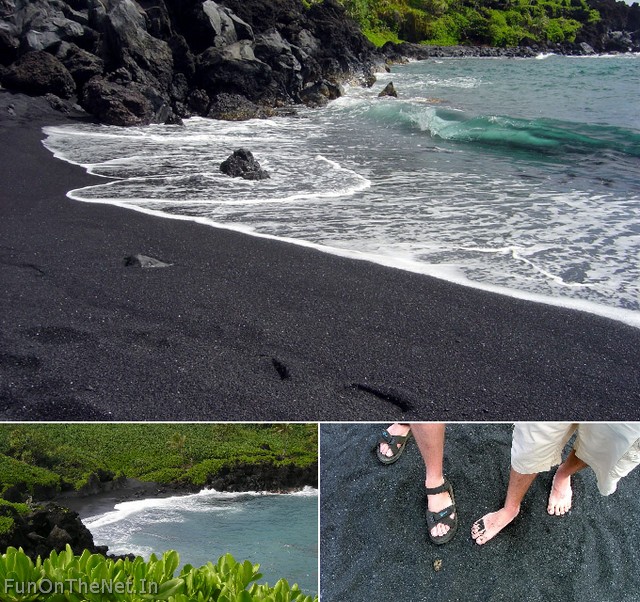 Punalu'u Beach is the most visited of the few black sand beaches on Hawaii's Big Island and the stunningly black sand is actually volcanic rock, deposited as lava and subsequently cooled when met by the ocean. Apparently to take any of the sand home would result in you being cursed by a volcano goddess by the name of Pele.  
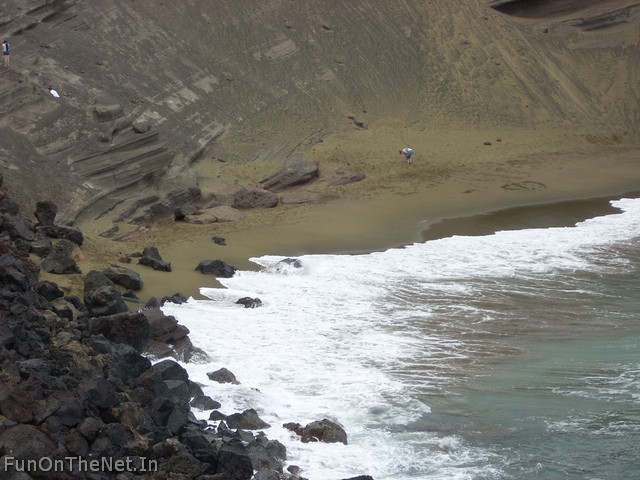
Green Sand Papakolea Beach

One of only 2 green sand beaches in the world, the truly magnificent sight of Papakolea Beach can be experienced by travelling to Hawaii's Ka'u district. Again, the unique colour of its sand can be attributed to volcanic activity - specifically, the green hue belongs to the abundance of olivine crystals which have been produced as a result of a nearby cinder cone erupting and eroding.

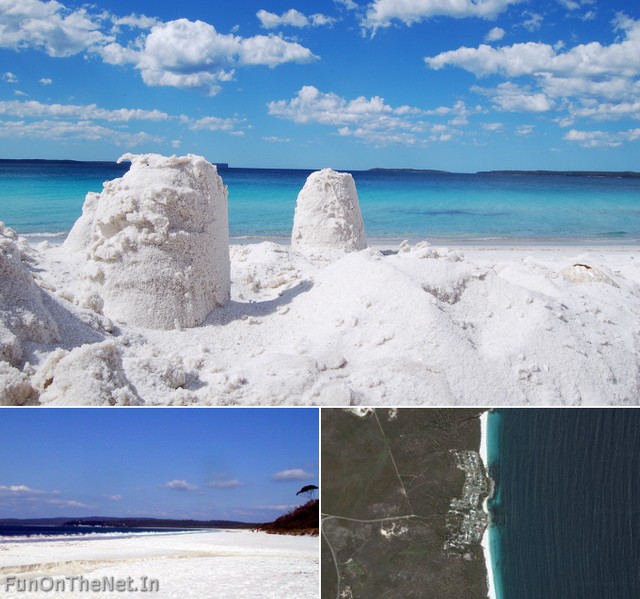
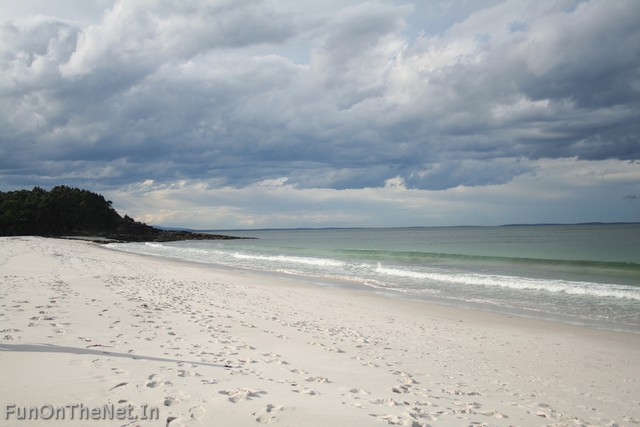
 Hyams Beach
You may need to wear your shades when visiting Hyams Beach in New South Wales, Australia, but not just due to the sun. It's not surprising after looking at photos but this sublime stretch of beach is home to the whitest sand in the world, an honour awarded by the Guinness Book of Records.

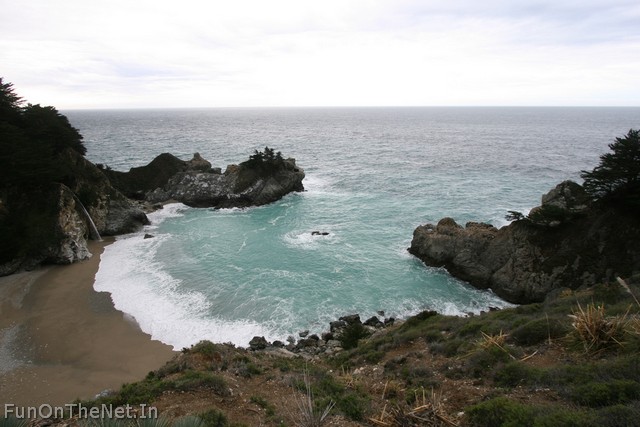
Pfeiffer Beach
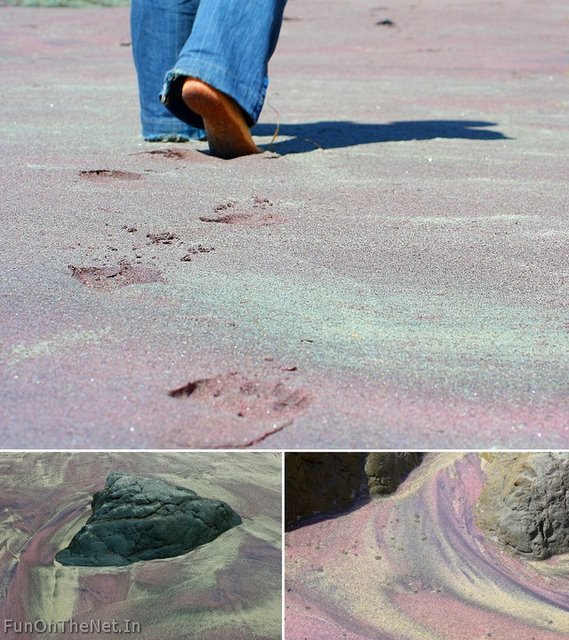
The hills surrounding Pfeiffer Beach in Big Sur, California, are rich in Manganese Garnet. A result of this being washed down onto the beach is the colour scheme you can see above - the entire stretch of sand has become a shifting, pink and purple canvas. Although it's probably inedible, I can't help picturing a bowl of Raspberry Ripple ice-cream every time I see it.

Kaihalulu You won't find many beaches elsewhere in the world with sand as red as this one. Kaihalulu, or Red Sand Beach, is situated on the island of Maui and can thank the neighbouring cindercone hill for its intensely deep red appearance. 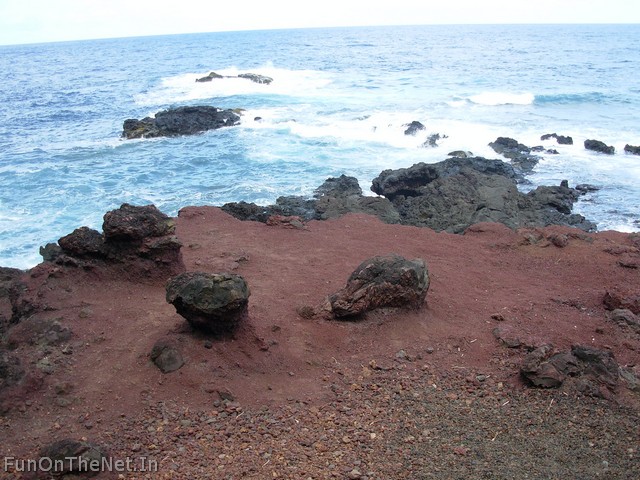

4 ways to keep your cool in anger-inducing situations Getty Images stock When you're stuck in traffic, before you blow your cool over that slow driver in front of you, imagine it's your grandmother. By Laura Roberson
Men's Health Having one of those days where things just aren't going your way and you want to yell, scream and pull your hair out? Well, hold tight with these solutions to stress-inducing situations. The situation: Your parking spot was stolen
Of course you're key-their-car mad. "The angry response is the natural response," says Leon James, Ph.D., a psychology professor and founder of DrDriving.org. To quiet your impulse to flip the bird, roar like a lion. Sure, it feels silly; that's the point. "The situation becomes humorous," James says. "If you control yourself for those first 10 seconds, then reason can take over." For more guy wisdom and life advice, sign up for our Best Life newsletter. The situation: Someone is talking during a movie
Tell yourself what seems like rudeness may just be a bad habit. "We're so used to speaking while watching TV at home that some people don't differentiate between the two," says Pier Forni, Ph.D., author of The Civility Solution. Take a light approach: "My wife is a big fan of Clooney--she'll die if she misses this. Mind keeping it down?" If that fails, see a manager. Another alternative: Learn The 2-Minute Trick to More Self Control. The situation: A slow driver is in the fast lane
Before you ride Grandma's bumper, pretend the driver is your grandma. "If you pick somebody you wouldn't express negative emotions to, then you're less likely to trigger a negative response," says James. Then address the underlying aggravator: You're feeling trapped. Roll your window down or scoot your seat back a bit until you find a safe opportunity to pass. This situation: You're calling customer service
As soon as the rep answers, establish a rapport by addressing him (or her) by name, says Ed Gagnon, president of Customer Service Solutions. So when you're fed the "That's just our policy" line, you can say, "John, can you explain the policy and what my alternatives are?" Using his name reminds you he's an actual person, which can help keep you calm.
TORONTO (RNS) Talk about an unlikely course in an unlikely place. The main chapel at Jesuit-run Regis College at the University of Toronto is adorned with stained glass windows, icons of Mary and Joseph, and the Stations of the Cross. The eight-week course, which meets every Wednesday afternoon, is on atheism. Or more precisely, "Responding to 21st-Century Atheism." It's an attempt, says the Rev. Scott Lewis, for people of faith to understand and come to terms with the increasingly muscular secularism and atheism that has arisen in Western societies over the past generation. Atheism "has become militant, aggressive and proselytizing," said Lewis, a Jesuit scripture scholar, who teaches the class with three other scholars. "It's made great in-roads and is now socially acceptable. If you're young and educated and believe in God, you're (seen as) a jerk." While the course examines the increasing polarization between non-believers and people of faith, it will not be about confronting secularists or engaging in polemics, Lewis stressed before the first class of about 155 students in the adult-education program. Both sides need to lighten up, he said. "One idea for atheists to leave behind is that people who believe are stupid or naive," Lewis suggested. "And perhaps we should leave behind the idea that an atheist is someone who is not ethical or a good person. "A person can be a believer and be quite intelligent. A person can be an atheist and be quite a morally upright person." It's the first time in memory that a Catholic academic institution in Canada has formally explored non-belief, but it nonetheless reflects the times. Five universities in the U.S. have secular humanist chaplains, and the University of Toronto now has two. "I think it's very natural to offer this course," said one of the two Toronto chaplains, Mary Beaty. "Universities are encountering more and more students asking these types of questions." A study last autumn by the Pew Research Center found the number of Americans who do not identify with any religion continues to grow at a rapid pace: One-fifth of the U.S. public, and a third of adults under 30, are religiously unaffiliated today, "the highest percentages ever in Pew Research Center polling." The study found that in the last five years alone, the unaffiliated have increased from just over 15 percent to just under 20 percent of all U.S. adults. Their ranks now include more than 13 million self-described atheists and agnostics (nearly 6 percent of the U.S. public), as well as nearly 33 million people who say they have no particular religious affiliation. Other polls have suggested that as many as one in 10 U.S. adults are atheists. Canadian census data show that atheists, agnostics, humanists and those with no religious affiliation account for 16 percent of the population, up 4 percentage points over the previous decade. They now represent the second-largest religious group in the country. A Canadian Ipsos Reid poll released in 2011 found 30 percent of respondents did not believe in a deity. However one parses the numbers, nonbelievers are undoubtedly getting bolder and even celebrated, as evidenced by best-seller lists in recent years. Lewis and other instructors conceded they will find it hard to avoid mentioning "New Atheist" authors Christopher Hitchens, Richard Dawkins and Sam Harris, but said they would not dwell on the trio. Lewis said he'll look at both sides of the debate. "What we will be focusing on is our response to individuals who have thrown down the gauntlet and say'To believe in God is not to be believe in science, and to believe in science is not to believe in God.'" "There's a little fundamentalism on both sides of the aisle." Central to the course will be the question of suffering -- "the oldest religious question in the world," Lewis said. "Why, if there's a good God, do we have suffering, especially of the innocent?" As for science and Darwinism, the biblical book of Genesis "is not a science book and should not be read as one. Our faith does not rise and fall on the age of the Earth." And people of faith are at a threshold moment: "We cannot continue thinking of God in traditional ways and still accept Darwinian science." Lewis said it's not uncommon for Catholic thinkers to believe in evolution. The course will include the work of the Rev. Pierre Teilhard de Chardin, a Jesuit priest who was also trained as a paleontologist and geologist. Teilhard de Chardin accepted Darwinism as fact as early as the 1930s, but his writings were condemned by the Vatican. The course comprises two lectures from Lewis; a look at psychology and atheism from Jesuit psychologist Rev. Joe Schner, who will examine whether the human brain is hard-wired for religion; an examination of suffering by Michael Stoeber, who told the introductory class that the "New Atheists" tend to overemphasize "the underbelly of the Catholic Church"; and a theological and philosophical perspective from Jesuit Gordon Rixon Credit : http://www.huffingtonpost.com/2013/01/25/regis-college-catholic-atheism-course_n_2554116.html
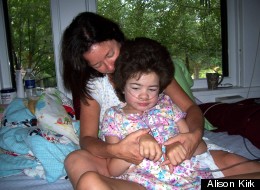 Alison Kirk with her daughter, Caroline Kirk, in 2007, the year before she died. A little over five years ago, Alison and Doug Kirk held their 9-year-old daughter's hand as she lay on a futon in their Nashville living room, told her they loved her, and watched her take her last breath. The Kirks had known for a long time that their little girl, Caroline, would die. In her last weeks, she was under hospice care, lived off an oxygen machine, was fed through a tube, and spoke only in small murmurs. It was the normal course for a child born with Niemann-Pick, a terminal disease that gradually leads to the breakdown of the nervous system, brain and lungs. What happened after Caroline's death was anything but typical. Alison and Doug carried Caroline upstairs to the bathtub, where they washed her skin and hair, dried her limp, 45-pound body with a towel and placed her head on a pillow on the bed in her old room. Alison slipped a white communion dress on Caroline, turned up the air-conditioning and put ice packs by her daughter’s sides. She put pink lipstick on the child's paling lips, and covered up Caroline's toes and fingers, which were turning blue at the nails, with the family quilt. Caroline stayed in her bedroom for 36 hours for her final goodbyes. There was no traditional funeral home service, and no coroner or medical examiner was on hand. Caroline's death was largely a home affair, with a short cemetery burial that followed. "We had taken care of Caroline her whole life," recalls Alison, whose other daughter, Kate, has the same disease and will also have a home funeral. "Why would we give her to someone else once she died?" Each year, 2.5 million Americans die. For the majority, about 70 percent, deaths happen in a hospital, nursing home or long-term care facility. What happens afterwards is nearly always the same, with few exceptions for religious traditions: A doctor or nurse will sign a death certificate and the body will be whisked to the funeral home, where it's washed, embalmed, dressed, and prepared for a viewing and burial. A family usually sees the dead only a few times: when they die, if there's an open-casket viewing and in the rare case when a casket is opened during burial. But a small and growing group of Americans are returning to a more hands-on, no-frills experience of death. In the world of "do it yourself" funerals, freezer packs are used in lieu of embalming, unvarnished wooden boxes replace ornate caskets, viewings are in living rooms and, in some cases, burials happen in backyards. Nobody keeps track of the number of home funerals and advocacy groups, but home funeral organizations have won battles in recent years in states such as Minnesota and Utah that have attempted to ban the practice. Most states have nearly eliminated any requirements that professionals play a role in funerals. It's now legal in all but eight states to care for one's own after death. And the growth of community-based, nonprofit home funeral groups and burial grounds that are friendly to the cause point to an increasing demand. The reasons vary from the economic to the psychological and cultural. The average funeral costs $6,560, while a home funeral can cost close to nothing. In a society where seeing death and speaking of it is often taboo, home funeral advocates are challenging the notion that traditional funerals are anything but a natural end to life. Instead, they assert, death and mourning should be seen, smelled, touched and experienced. "There are people who get it and think it's a great idea. And there are people who have been so indoctrinated to think a different way, a less hands-on way, that they can't imagine anything else," says Elizabeth Knox, the founder of Crossings, a Maryland-based home funeral resource organization, and the president of the National Home Funeral Alliance. Knox travels across the nation to run trainings on do-it-yourself funerals and her book on her daughter's home funeral is what inspired the Kirks to do their own. Her group is one of several that have seen interest grow in recent years. They include Final Passages (California), Natural Transitions (Colorado) and Undertaken with Love (Texas). There are 61 organizations that are members of the NHFA, many of which are run by just one person. "A lot of people don't want to do anything with touching dead bodies," says Knox. "They consider it creepy. But it can actually be the first step to healing and acceptance of death. Slowing down the process allows all involved to absorb the loss at their own pace. It's an organic emotional and spiritual healing not available from limited calling hours at a remote location." ***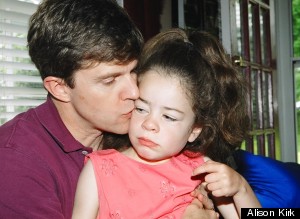
Caroline's father, Doug Kirk, and her when she was five. It was four years before her death.
Caroline died at noon on a Tuesday. Through Thursday morning, her body stayed in her childhood home, surrounded by old dolls, stuffed animals and her favorite books. Friends and family came in and out to say goodbye. Some would get on the bed beside her body, stroking her face and hair. Others would sit across from her in a rocking chair. "In the morning, I spent time with Caroline. At night, I spent time with Caroline. I would tell her goodnight. It was very calming to sit next to her. I touched her. I kissed her. And I felt like this is where she was supposed to be," says Alison. "I told her things that were happening. I said there had been suffering in the last few days, but it was a relief that she was not suffering anymore." A few dozen visitors came to the house throughout Wednesday. There was a guestbook in the downstairs hallway, and people would gather to chat on the porch. "Caroline is in her room, and if you want to say goodbye to her, you can do that," Alison would tell each guest. Most went upstairs for private visits in her bedroom. At least one couple decided not to visit her there. In Tennessee, where the Kirks live, the laws on home funerals are relatively lax. After getting a death certificate -- Alison and Doug had Caroline's pediatrician sign off on one -- a family is free to do what it wants with a dead body within a reasonable amount of time. Alison had a funeral director, who was friendly to her ideas, on-call for urgent needs like figuring out how to patch up a leaking hole in Caroline's stomach once a feeding tube was removed. She also had him bring a hearse with a casket to her home. 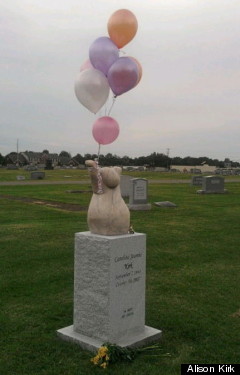
For her first birthday, Caroline's aunt gave her a dancing figurine made of glass. Her parents commissioned a whimsical, bigger version of it to rest on Caroline's gravestone in Mount Hope Cemetery, about 20 miles south of Nashville.
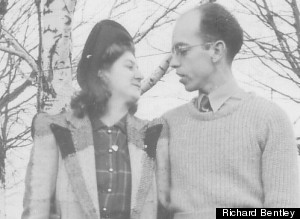
"I did look into if we could bury Caroline at our own house. We could have," says Alison. "But it's not like we are on some ancestral ground that has been passed for generations." She opted for a cemetery. Mount Hope, about 20 miles south of Nashville in Franklin, fit her needs. It's small, with a "country feel," she says. "No big landscaping, and not this big uniform place." On Thursday morning, the family carried Caroline back downstairs. They lifted her into a casket that was a simple, pine box. Alison putThe Little Engine That Could next to her daughter. Doug put in a small, leather keychain shaped like a vintage ink jar that he had used since college ("It was a continuity of presence," he says. "I pretty much had it on me or nearby for 26 years ... It was irreplaceable even though it meant nothing to anyone else but me"). He rode in the hearse with his daughter, and before the body was lowered into the ground, the hospice chaplain read "The Circle of Days," an adaptation of a prayer by Saint Francis of Assisi that honors God's creation of the elements, animals and the heavens. Doug sang Caroline's favorite song, one that would always soothe her in times of pain: "Big Rock Candy Mountain." It tells the story of a hobo's idea of paradise. Afterwards, there was a memorial service at Vanderbilt University, where both parents first met. Religion in any formal sense was absent. "We wanted a simple funeral because her life was simple," says Alison. "It was short and simple." She also considers it one of the best decisions she has ever made. ***It's not always as easy as the Kirks found it to be. Richard Bentley, a 70-year-old retiree who lives in Tupper Lake in upstate New York, has tried twice to take care of his loved ones when they died. His dad died in 2008 of multiple myeloma, a cancer of the plasma cells, and, 13 years before that, his mother died of an aortic dissection. New York is one of the few states that requires a funeral director to be present or to sign off on nearly every part of after-death care. Medical examiners and coroners have to turn over bodies to funeral directors, and the law says an undertaker has to personally oversee each funeral. (The other states with similarly restrictive laws are Connecticut, Illinois, Indiana, Louisiana, Michigan, Nebraska and New Jersey). For his father, Bentley says the process was unnecessarily intrusive. He wanted a cremation, which would usually require a death certificate, transport of the body and a cremation fee in most states, but he had to meet with his hospice nurse, the town clerk and the local funeral director to arrange all the paperwork necessary. The total cost: $940. He reluctantly obliged. "One doesn’t wish to think about things like cost and comparison shopping at the time of a loved one’s death," says Bentley. "At the same time, I do not believe, and my father before his passing did not believe, that some stranger should be entitled to walk off with a week’s wages or more in return for a few hours of work at the expense of the loved one’s spouse and children." Because his mother was airlifted to a hospital in Vermont to have her heart condition treated, Bentley says he had a much easier time with her. She died in the hospital, where he had a family viewing in the chapel, and he was able to take her body -- stored in a box -- from the morgue to his car. He drove her to a crematorium near the Vermont-New Hampshire border (it would have been illegal to transport the body to New York state), where it was cremated over the next few days. Her boxed ashes later arrived via mail to his house, where he held her memorial. "We would like to see New York state change its funeral law to allow family to handle such matters as filing death certificates, home viewing and preliminary care of the deceased, and transportation of the deceased without the intervention of a licensed funeral director as prescribed by current law," says Bentley, who's on the board of the Memorial Society of the Hudson-Mohawk Region, a group that monitors New York funeral laws and counsels families interested in home funerals. "There is no public need that is satisfied by such laws."
| Page:
|
|
|
|
|
40 |
|
|
|