It may be a very esoteric job role but stunt performers consider their career path as an art because it takes immense amount of skill and bravery to go out and do what they do everyday. Even one moments hesitation could cost these men their lives and everyday on the job is risking it. Here's a list of the most daring, most craziest ,and, as some might even consider, the most stupidest stunts ever performed. These stuntmen have gathered a fanbase and almost become a cult because of their bravado.
1. Houdini: Harry Houdini, an American stuntman, was widely reputed as one of the greatest magicians of all time. His stunt performances were so daring and one-of-a-kind that they were considered as magic. He gained mass popularity for many of his acts such as the 'Suspended Straightjacket' or the 'Milk Can'. During his time, there were many people who tried to copy his acts. Houdini performed the 'Chinese Water Torture Cell', which features in this list, to discourage and outrival his imitators.
Houdini's "Chinese Water Torture Cell" Escape performed on a TV Show -
2. Ormer Locklear Locklear, a pilot, became famous as an airplane wingwalker and pioneered this act, unintentionally, in 1918. He needed to fix an engine problem mid-flight and, therefore, had to walk the wing of his plane. He, later, went on to become a reknowned airplane walker/stuntman in Hollywood, untill his death in 1920.
3. Dan Goodwin: Dan Goodwin was nicknamed SpiderDan when he climbed the Sears Towers, the tallest building in Chicago at the time, to prove naysayers wrong. He witnessed a fire at the MGM grand in Nevada on November 21, 1980 and was convinced he could have saved them by climbing the building and attaching cables to the floors to allow rescue baskets to move to and from helicopters. When he shared his rescue plan with the fire department they laughed at him. His stunt was meant as a challenge to their disbelief.
4. David Smith Junior: David "The Bullet" Smith otherwise known as the 'Human Cannonball' invented one of the most entertaining and daring stunts in history. He has been fired out of a cannon more than 500 times, astonishing live audiences all over the world. He may have his imitators, like Houdini, but he maintains the spot of highest flying human cannonball.
5. Philippe Petit: Philippe knew what he wanted from life at the early age of 16, which is when he started his act of walking a high-wire. His masterpiece or 'Le Coup' as he would like to describe it is when he walked a high-wire between the Twin Towers in New York. 'Man on Wire' is a film based on this very stunt which won the 'World Cinema Jury' and 'Audience' award at the Sundance Film Festival 2008.
6. Evel Knievel: Evel Knievel, born Robert Craig Knievel was a motocycle daredevil stuntman who gained entry into the Guinness Book of World Records for 'Survivor of Most Bones Broken in a Lifetime'. He was known for his iconic performances worldwide but what gave him most acclaim was his act at Caesar's Palace in 1967. Knievel's retirement came when he broke both arms on an act while also causing the cameraman he crashed into to lose an eye.
7. Buster Keaton: Keaton was an American comedy actor who made a name for himself as one of the most daring actors in Hollywood.This audacious actor performed these daring stunts just to provide comic relief to his fans. His most daring of them all was when he was standing in front of a 2000 pound, 3-storey collapsing house and managed to escape unscathed.
These bridges are some of the most death defying, extreme bridges of the world! Includes bridges from Greece, Ireland, Malaysia and even Pakistan!
The Immortal Bridge (China)
Mount Tai in the Shandon Province of China has had cultural and religious significance for thousands of years. It is one of the five sacred mountains of China and is associated with the dawn, birth and renaissance. As you progress up the mountain you will come across this – The Immortal Bridge. This Bridge is composed of three huge rocks and several smaller ones. Below it is a valley and to the south is a seemingly bottomless abyss. No one knows quite when these enormous rocks fell into their current place but it is quite likely they have been like this since the last ice age.
The Old Bridge of Konitsa (Greece)
This centuries-old bridge in Greece spans the river Aoos, which is full in winter. If you look carefully to the right under the top of the bridge, you can see a small bell. Villagers say that when there is enough wind to make the bell sound, it is too dangerous to cross the bridge.
The Carrick-a-Rede Rope Bridge (Ireland)
Carrick-a-Rede Rope Bridge is a rope suspension bridge near Ballintoy, County Antrim, Northern Ireland. The bridge links the mainland to the tiny Carrick Island. The site is owned and maintained by the National Trust, spans twenty metres and is thirty metres above the rocks below. Today the bridge is mainly a tourist attraction, with 247,000 visitors in 2009. When it's windy, this is truly an exhilarating experience – terrifying (if you're afraid of heights) but exhilarating.
Royal Gorge Bridge (Colorado)
The Royal Gorge Bridge is a tourist attraction near Cañon City, Colorado, within a 360-acre (150 ha) theme park. The bridge deck hangs 955 feet (291 m) above the Arkansas River, and held the record of highest bridge in the world from 1929 until 2003, when it was surpassed by the Beipanjiang River 2003 Bridge in China. It is a suspension bridge with a main span of 938 feet (286 m). The bridge is 1,260 feet (384 m) long and 18 feet (5.5 m) wide, with a wooden walkway with 1292 planks. The bridge is suspended from towers that are 150 feet (46 m) high.
Inca Rope Bridge (Inca Empire, Peru)
Inca rope bridges were simple suspension bridges over canyons and gorges (pongos) to provide access for the Inca Empire. Bridges of this type were suitable for use since the Inca people did not use wheeled transport - traffic was limited to pedestrians and livestock. These bridges were an integral part on the Inca road system and are an example of Inca innovation in engineering. They were frequently used by Chasqui runners delivering messages throughout the Inca Empire.
Pulau Langkawi's Suspended Bridge (Malaysia)
This sky bridge spans around the gorge on Pulau Langkawi, which is the largest island in the Langkawi archipelago, Malaysia. It's suspended at 687 m above sea level, offering magnificent views of the Andaman Sea and Thailand's Tarutao Island. The view from the bridge is really breathtaking – its curves provide different perspectives of the landscapes. The Sky Bridge is one of the most spectacular bridges in the world that delivers quite a pump of adrenaline. This unique cable-stayed bridge is suspended by only one support column. This 95-yard column is held up by 8 load-balancing cables. The curved pedestrian bridge spans 125 m across a spectacular chasm. The bridge is 136 yards long and 2 yards wide. The 1.8 m-wide Sky Bridge had two 3.6 m-wide triangular platforms that provided a spectacular viewing area for visitors. And remember when in the front of the bridge, you are standing 687 m above sea level.
Puente de Ojuela (Mexico)
Ojuela was a small mining settlement located northwest of the city of Durango, Durango, in northern Mexico. The settlement is now well known as a ghost town as a result of the mineral ore being exhausted. The only surviving and functional structure is a suspension bridge. The bridge is known as "Puente de Ojuela" (Ojuela Bridge) by the locals. The original bridge was designed by the famous Roebling brothers, who also designed the Brooklyn Bridge. At the time of construction, the Puente de Ojuela was the third longest suspension bridge in the world. It was rebuilt recently by the Peñoles Company, the original was scrapped and only the main arches are now displayed at the Torreón Exposition Center.
Hussaini Hanging Bridge (Pakistan)
Known as the most dangerous bridge in the world, the Hussaini Hanging Bridge is only one of many precarious rope bridges in Northern Pakistan. For most of the citizens, the only way to travel was by walking across mountain passes to Rawalpindi. In 1978, the Karakoram Highway was completed and the region was connected, but inter-region travel remains as difficult as it was 100 years ago. Regular aspects of travel through this region include the rickety cable and plank bridges which cross Northern Pakistan's mountain streams and rivers. Among these is the Hussaini Hanging Bridge, crossing Borit Lake in the Upper Hunza. This rope bridge is both long and poorly maintained. Many planks are missing, and strong winds shake the bridge as you cross it. It does little to ease nerves that a previous, older, broken bridge hangs in tatters next to the "new" one.
Vitim River Bridge (Siberia)
This broad river is the Vitim River in Siberia, Russia. The bridge that's provided to get you across is made of wood and not in a very good condition. It's only wide enough for one car but it's 570 meter (1870 feet) so it takes good 3 minutes to drive across it if you're a skilled driver. If you're not so skilled, you could be looking at a 15 meters drop into the Vitim River, which ain't no fun. And that's really nothing. Vitim River Bridge is in Russian Siberia. For those who don't know this region, it gets brutally cold there most of the year with temperatures way below Northern Ontario and everything covered in snow and ice. This bridge turns into an icicle with no traction yet locals drive up and down this bridge as it's often their only way across Vitim River.
Bryce Canyon's Natural Bridge (Utah, US)
Natural Bridge, the most popular arch in Bryce Canyon, is located 1.7 miles past Fairview Point and is visible from the Natural Bridge turn-out. The naming of Natural Bridge in Bryce Canyon caused a slight uproar in the geology circles. Even though the natural-made structure looks like a bridge, it is in fact an arch. (Link | Photo)
Preikestolen, which means the Preacher’s Pulpit, is a 604 m (1982 ft.) high cliff in Norway. Its almost flat top with a stunning view of the fjord and the green hilltops and valleys below is one of the most famous tourist attractions in the country.
We have come a full circle when it comes to housing arrangements. We started off living in caves and seem to have come back to the same point. This is because we’ve finally realized that it’s actually a very eco-friendly way to live. However, building a house underground is not an easy task and things are bound to get complicated. These 10 underground homes are so fabulous that it’ll make you want to build your own underground abode!
1) Flower Petals
Located in Bolton, UK this house belongs to British football star Gary Neville. It is hidden under the ground except for the petal-shaped openings designed to allow the light to enter and light up the entire house. It is sprawled across 8,000 sq ft and was designed by Make Architects to keep energy consumption to a minimum.
2) Swiss Mountain Underground House
This unique house has been designed by the architects of SeArch, Netherlands and Christian Muller. It is located in the Swiss village of Vals and is hidden on all sides save for one. This magnificent structure has been planned in such a way that it completely eliminates the need of cooling in summers and heating in winters.
3) Estate Lättenstrasse
This house looks like its stepped straight out of a fairytale. The Swiss estate actually consists of 9 houses connected by stairs that lead down to a basement and even a parking lot. Designed by Vetsch Architektur, this house uses the ground as insulation and this is protected from rain, natural abrasion, wind and extreme temperatures.
4) The Cave House
Carved out of a mountain, this house is located in Festus, Missouri. It is the brainchild of Curt and Deborah Sleeper and has been used for many different purposes over time. This 15,000 square foot residence was originally used as a mine for decades. It was also used as concert venue and a roller skating rink. The cave house needs no air conditioning or a furnace for cooling and heating the house due to its intelligent design and geothermal heating.
5) Greek Isles Underground House
Designed by Deca Architecture, this underground house has been made only from natural materials. It has been carved in such a way that only the second story is visible above the ground. It has been specially designed to withstand that windy weather of the Aegean Sea.
6) Stone Desert Home
The Stone desert home is built in such a way that it looks more like a half-buried ruin that a modern home. Designed by Deca, this eco-friendly house is built between the slopes of two adjacent hillsides and barely rises above the dessert level surrounding it. As the house is half-hidden in the earth, it utilizes natural light and heat as well as cooling cross-winds.
7) Malator Underground Eco House
This house has been given the nickname of ‘Teletubby house’ because of its turf roof, steel chimney and peephole doorway. It has been phrased as the ‘blueprint for the future of Welsh Housing’ and is considered as one of Wales architectural masterpieces. The interior of the house is very simple, with only one room inside which is divided by prefabricated colored pods.
8) Sedum House
Sited in the steep sand hill in North Norfolk Coast, this house is a home of the future. It is eco-friendly, easy to heat and cool and also has a unique rain water harvesting system. The main focal point of the design is the ‘sun’ even though most of the house is underground. It was built to maximize exposure to sunlight and thus the house has plenty of sunlight during the winters too.
9) Cave Dwellings
These cave dwellings are 700 years old and are carved out of natural volcanic rock formations. They’re situated at the base of Mt.Sahand, Iran. As these apartments are very old, they have all been renovated and have all the modern necessities of home.
10) Hidden house
This underground house from KWK Promes has been designed in such a way that only the residents of the house can access its roofs, via a set of stairs inside the house. It has been built keeping modernistic elements in mind and is a perfect blend of indoor and outdoor features for its residents.
Nature has a way of persisting through the destruction we wreck and being bountiful despite it. Everything erodes but nature preserves itself and lives on while we perish. These are some the oldest and most beautiful living things known to man.
1. Jomon Sugi Tree: This large “Yakusugi Cedar†tree was located in 1996 and has since become quite famous. It is said to be the largest Cedar tree in Japan. It is 25 meters tall with a trunk circumference of 16.2 m (53 ft) and estimated to be around 2,200 years old (some claim that it is much older). It is called “Jomon-sugi†(meaning Old Cedar) and is located in the Yakushima World Heritage Area.
2. The Sarv-e-Abarkooh Cypress Tree: Also called the Zoroastrian Sarv, The Sarv-e-abarkooh Cypress tree is located in Abarkuh, Yazd, Iran. Protected by the Cultural Heritage Organization of Iran as a national natural monument, it is indeed a major tourist attraction with a height of 25 metres and circumference of 18 metres. It is estimated to be over 4000 years old and may be the oldest living thing in Asia. According to the China Daily ranking of the top 10 oldest trees in the world, Sarv-e Abar-Kuh is the second oldest tree in the world and it holds a special place in the hearts of all Iranians, with strong religious connotations.
3. ‘Alerce’ Patagonian Cypress Tree: Another tree which is known to have been around for 35 million years, due to fossilised remains – the oldest today being a youthful 3,600 years of age – is the Patagonian Cypress, also known as the 'Alerce'. So valuable was the wood of this tree to the Chilean locals that they used roof shingles made from it as money.
4. Jardine Juniper Tree: The Jardine Juniper was discovered on July 23, 1923, by Maurice Blood Linford, a student at Utah State University. It stands on a ridge of rocks roughly 1 mile up the mountainside, directly west of the mouth of Cottonwood Creek, nearly 16 miles up Logan Canyon. From the immense size of the trunk he decided that the tree was nearly 3,000 years old. The circumference of the trunk was 26 feet, 8 inches, and the tree stood 44 feet, 6 inches tall.
5. ‘Patriarca de Floresta’ Tree: Yet another ancient South American resident is the 'Patriarca de Floresta' tree of Brazil. One of the biggest trees in the Atlantic Forest, this one is thought to be at least 3000 years old, almost certainly the oldest non-conifer tree in Brazil. The tree is believed to be sacred, but its species is widely threatened due to forest clearing in Brazil, Colombia and Venezuela.
6. ‘Chestnut Tree of 100 Horses’: This tree, located on Mount Etna in Sicily, is the largest and oldest known chestnut tree in the world. Believed to be between 2,000 and 4,000 years old, this tree's age is particularly impressive because Mount Etna is one of the most active volcanoes in the world. The tree's name originated from a legend in which a company of 100 knights were caught in a severe thunderstorm. According to the legend, all of them were able to take shelter under the massive tree. It is listed by Guinness World Records as having the "greatest tree girth ever," at 190 feet in circumference.
7. The ‘General Sherman’ Giant Sequoia, USA: One of the youngest of these ancient trees is the 'General Sherman', a Giant Sequoia that stands 275ft tall and measures 102ft in circumference at the base. It can be found in the Sequoia National Park. As of 2002, the trunk volume was measured at about 1487 cubic meters, and has been identified as the largest tree in the world by wood-volume. It is believed to be between 2,300 and 2,700 years old.
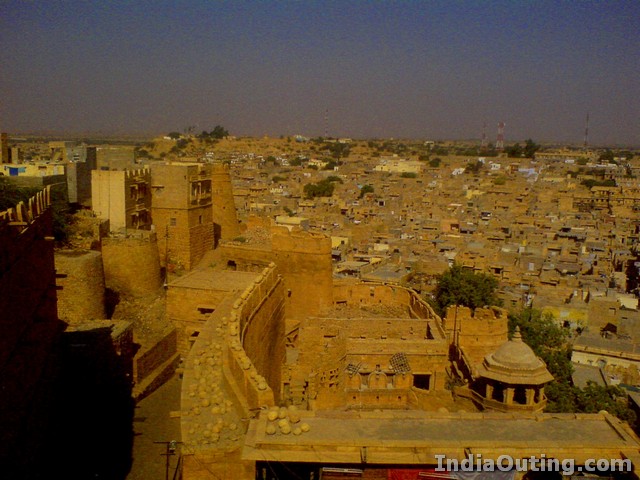
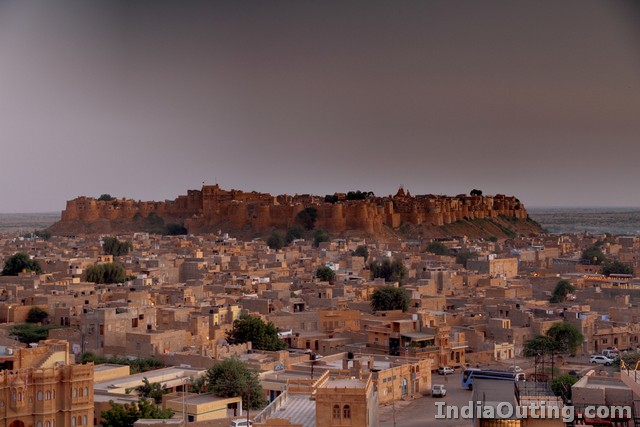
Jaisalmer, also known as “The Golden City†is a town in Rajasthan. It was once known as Jaisalmer state and is the administrative headquarters of the Jaisalmer district. It’s not a very large town, with a population of about 78,000. However, it has a charm of its own and is a paragon of beautiful culture and harsh climatic conditions. Jaisalmer is named after Maharawal Jaisal Singh who founded the city. He was a Rajput king in 1156 AD. “Jaisalmer†means “The hill fort of Jaisalâ€.
The entire city is built out of yellow sand and yellow sandstone due to which it came to be known as “the Golden Cityâ€. The old city was completely encircled by a wall but much of it has crumbled sadly for want of building material in recent years. Just like all the other cities in Rajasthan, Jaisalmer also has its own glorious past.
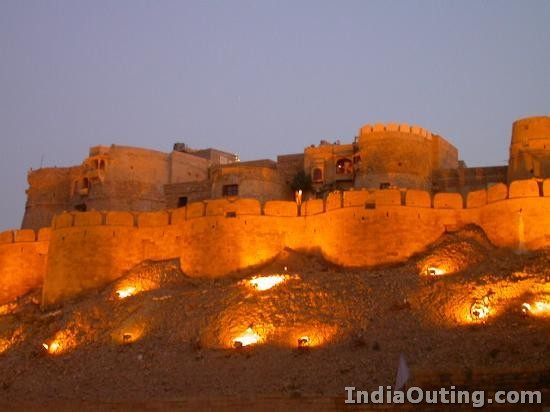
According to the legends, the then Rajpur ruler of Jaisalmer, Maharawal Jaisal Singh founded the city at the behest of a local hermit named Eesaal, whom he respected a lot. In order to ensure his safety he built the fort on the Trikut hill because its location made it quite inaccessible and he could keep a watch on his surroundings. This helped him to know the movements on his enemies well in advance. The main source of income of the Bhatti Rajput rulers in the past was through the collection of taxes from the passing caravans. Jaisalmer was situated on one of the very important routes which connected India to several counties including Persia, Egypt, Africa and many western countries. Thus, it was a very busy business route and provided ample opportunity for the Bhatti rulers to collect taxes and amass huge wealth.
Due to its peculiar location, it remained out of bounds of any invaders for a long time. Only when the Bhatti Rajput rulers dared to loot the imperial caravan carrying treasures of Ala-ud-din Khilji, the Sultan of Delhi, they incurred this wrath. He led a siege around Jaisalmer to concur it and the siege lasted for 9 long years. In the final battle for their independence, the then ruler of Jaisalmer, Raja Jaisimha ‘s son Duda died while fighting the forces of the sultan. In the subsequent years, the rulers of Jaisalmer maintained good relations with the Mughal emperors. However, they did not accept the British rule easily. In fact, Jaisalmer rulers were the last to sign the Instrument of Agreement with the British Government.
Besides being a place of historical importance, Jaisalmer is still a living town and a major tourist attraction in Rajasthan. Unlike other forts, a quarter of the town’s population still lives inside the fort. This spectacular fort houses a royal palace (Raj Mahal), Jain temples and many sites worth visiting. The walls of the fort are constructed out of red sandstone which assumes a lovely honey-gold hue as the sun sets.
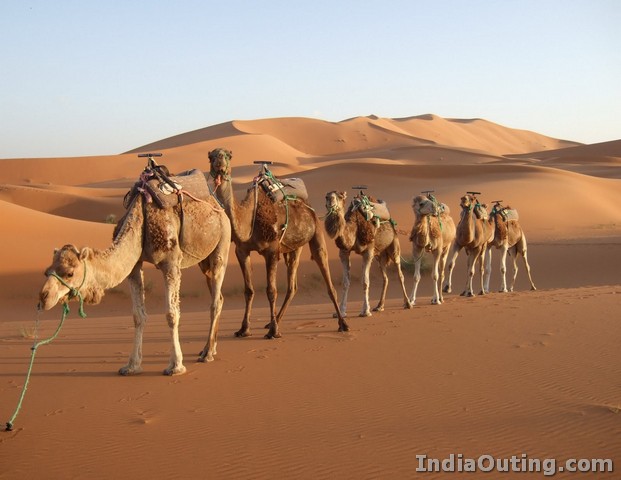
The people of Jaisalmer are very hospitable and are gifted with a lot of folk music, dance and art forms. The main means of transport in this part of the country are camels. One can enjoy a camel ride during a visit to this place.
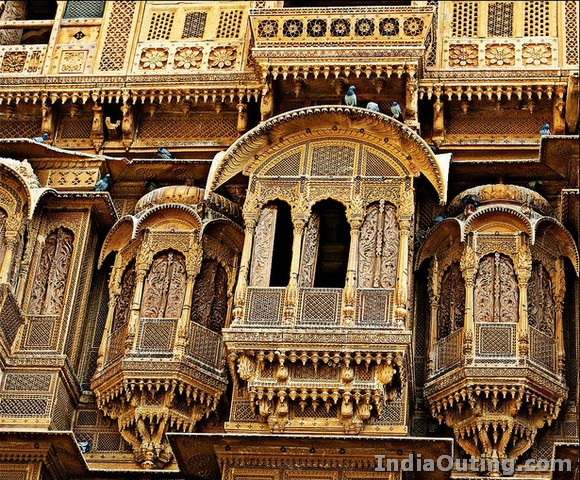
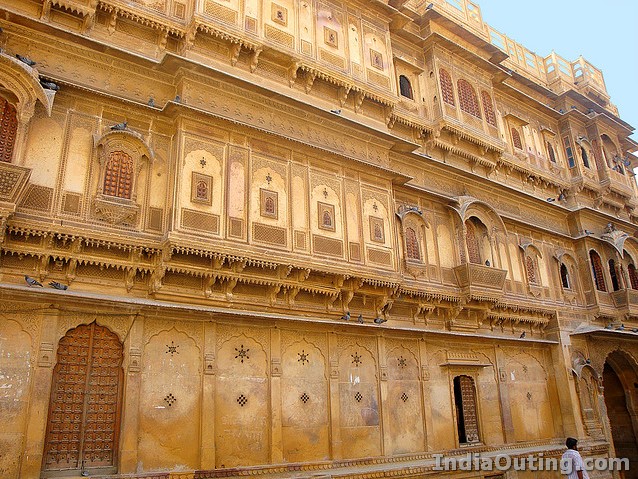
Jaisalmer has also got a rich cultural heritage and to display its rich past, the place has got a museum dedicated to the many artifacts used in the by-gone era. People interested in history would definitely enjoy a visit to this Government museum. In addition, there are mansions known as Havelis which used to the abodes of the rich, famous and powerful people belonging to the Raj Darbar of the rulers. These beautiful havelis were very well-crafted and are a piece of art and architecture of that time. Some of the most famous havelis are Patwon-ki-Haveli, Salman Sigh-ki-Haveli, Nathmalhi-ki-Haveli and Haveli Shreenath. A visit to these havelis will give you an idea of how lavishly the rich and powerful of that era lived.
People of Rajasthan are mostly vegetarian but they do prepare, serve and enjoy a variety of delicacies in their everyday life. A visit to Jaisalmer will definitely be satisfying to your culinary appetite besides capturing you with its magnificent sites and architecture. A visit to Jaisalmer will definitely prove memorable in all respects
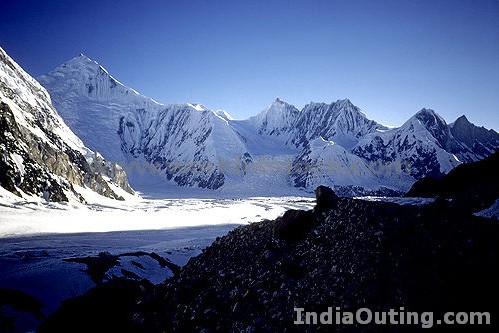
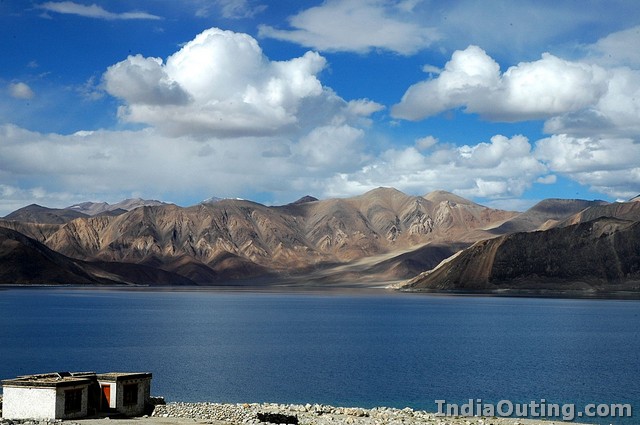
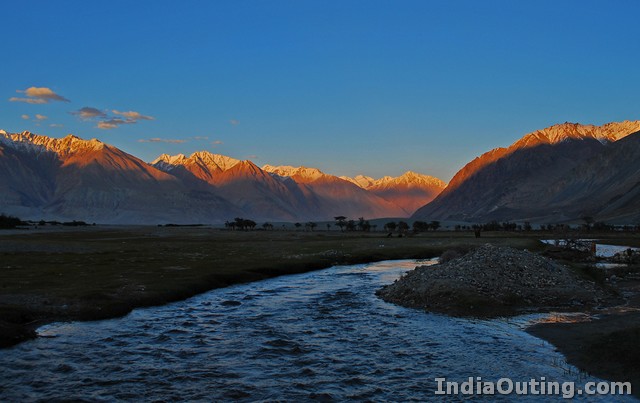
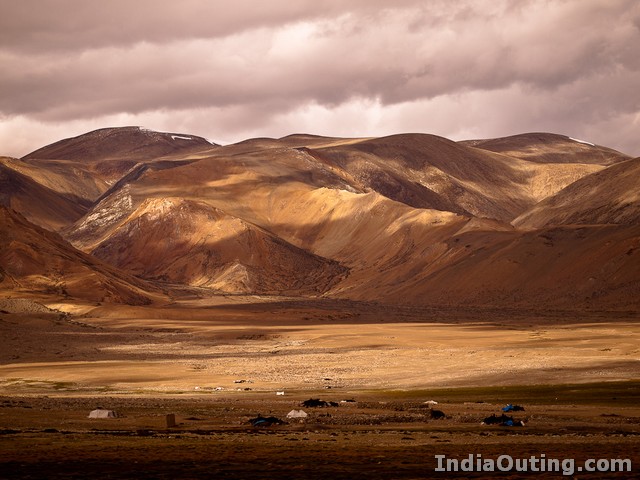
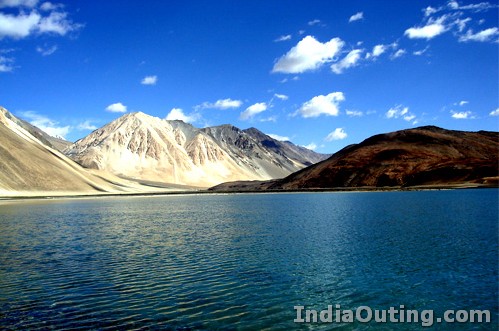
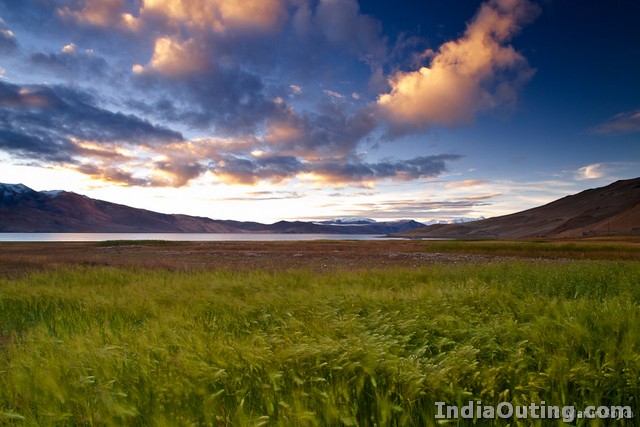
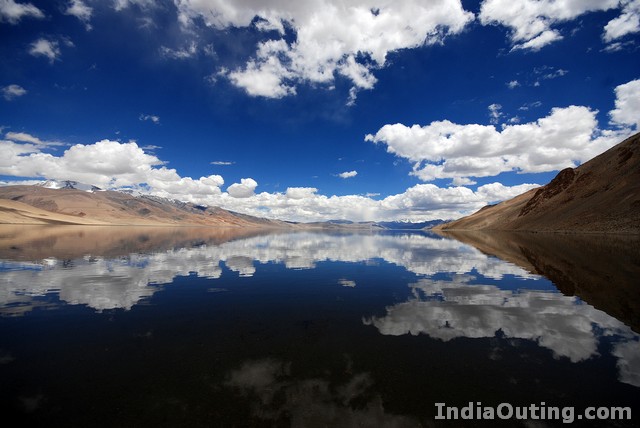
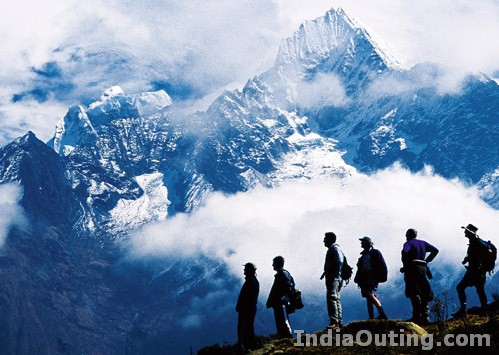
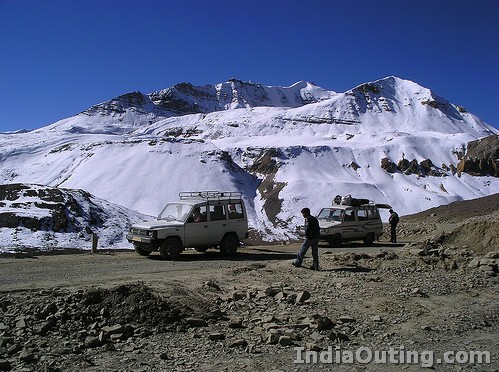
If you’re a fan of adventure, then Ladakh is the place for you. One of the most exciting ways to explore the landscape wonders as well as the remote areas of Ladakh. Crossing the Khardungla pass, considered to be one of the highest motor able roads in the world is a high like never before. Moreover, Ladakh is also a paradise for trekking and mountaineering due to its high peaks and mountains. You can also take part in and enjoy a number of fairs and festivals like the Losar festival, Hemis, Ladakh festival and tak-tok festival.
Ladakh is a part of Jammu & Kashmir in the north of India. It consists of two districts Leh and Kargil.
The district headquarters is based in Leh. Leh district consists of Leh town and 112 inhabited villages and one un-inhabited village. The total population of Leh district is 1.17 lacs. It is the second least populated district of Jammu and Kashmir, after Kargil.
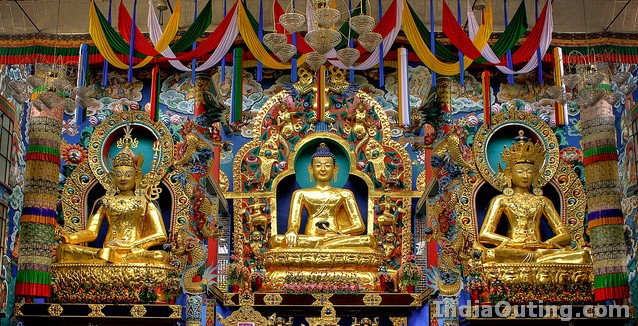
There are several ways of reaching Leh but it depends on the route that would be open. Srinagar and Manali are the two major gateways to Leh Ladakh. Ladakh was under the administration of Leh until the 1st of July, 1979, when the Kargil and Ladakh administrative districts were created. Religion had been the cause of a lot of distress between Buddhists and Muslims since the late 20th century and was one of the main contributors of this division. Tibetan and Buddhist cultures have prevailed for centuries now in these two places of India. A lot of Buddhist monasteries are prominent pilgrimage centers in the country. Its colorful gompas have attracted devout Buddhists from all over the world.
Travelers flock to this beautiful destination from all over the globe. It has plenty to experience and explore. The most impressive is the royal palace known as Leh Palace. The palace, which overlooks Leh, has a certain mystery to it. It was constructed by King Sengge Namgyal in the 17th century. According to history, it was later abandoned as the Kashmiri armies surrounded in the mid 19th century and the royal family that was residing here earlier moved to Stok Palace on the southern bank of the Indus. The palace comprises of nine stories of which the upper floors are meant for the royal families whereas the lower floors function as stables and store rooms. Exploring the palace from the inside will make you reminiscent of the days gone by.
Leh is the second largest district in the country with an area of 45, 100 square kilometers. It is at an altitude of 3524 meters. The district is constrained by Pakistan occupying Kashmir in the west and Ghanche district, China in the north. Aksai Chin and Tibet are to the east, Kargil district to the west and Lahul and Spiti of Himachal Pradesh to the south.
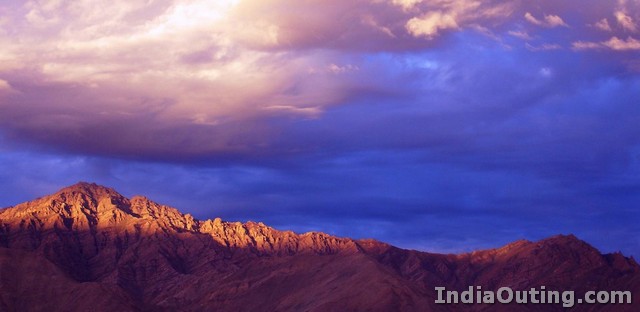
Leh-Ladakh is truly a voyage into the most magnificent peak and religious zone of the world. The best time to visit Lakadh is from the months of June to September which are its summer months.