Texas attorney Cynthia Stevens Kent is pushing to have all dog breeds and mixes of breeds that fall under the term “pit bull†outlawed in Texas. The possession of a “pit bull†type dog would result in a third degree felony.
The first proposal would ban all “pit bull†type dogs in Texas, making it a felony to “own†one. This is, in a nutshell, a proposal to kill every single pit bull in Texas.
ACTION NEEDED:
Contact the individuals below IMMEDIATELY and tell them you do NOT support any breed ban! The proposed pit bull holocaust in Texas must be stopped!
Contact Cynthia and express your strong opposition to both of these pieces of proposed legislation.
Keep in mind that contacts coming from Texas have the most impact, the following link is a good resource to find TX zip codes by county: http://bit.ly/gStyw7
Report from 2050: Livestock Production Breaks Safe Threshold
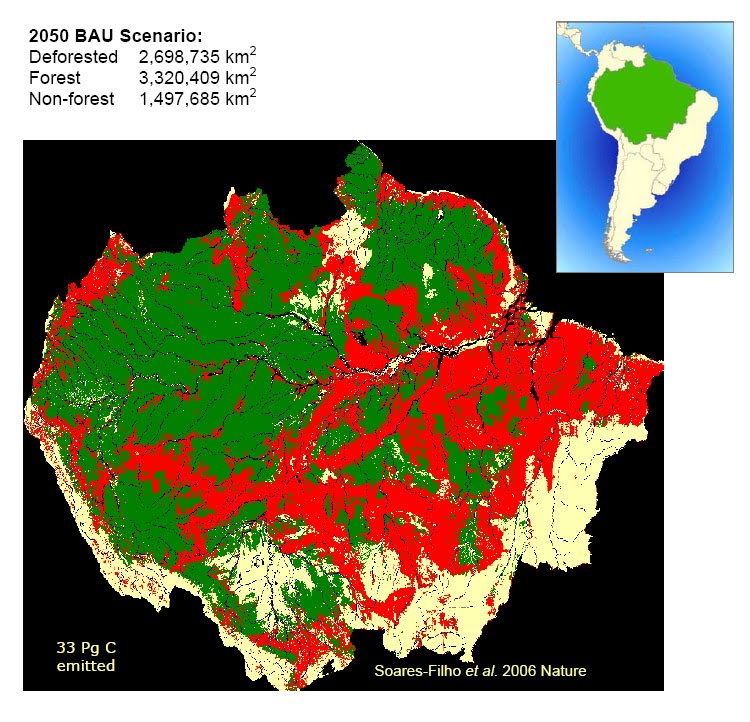
Rainforests and thousands of species wiped out as human demand for animal flesh finally exceeds Earth's limits
Editor's note: Last month was Victory Month, which looked back at some of the victories of 2010. This month, 13.7 Billion Years looks four decades into the future, presenting imagined reports from the year 2050, supported by current news, discoveries and scientific predictions. To see what's real and what's not, click on the links within the text.
JANUARY 19, 2050 (Brussels)
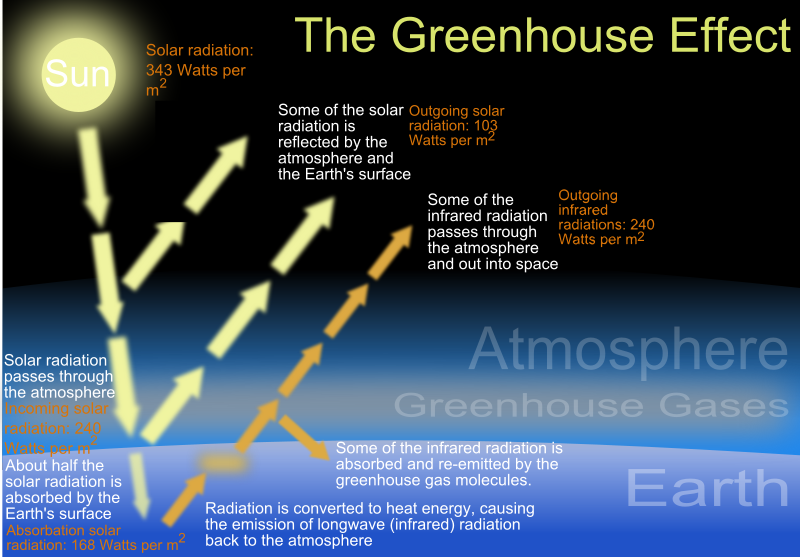
Four decades ago, in 2010, a study concluded that the projected global demand for meat, poultry, eggs and dairy could be responsible for 70 percent of the total greenhouse gas emissions by 2050, reaching a level considered to be a safe threshold for the planet.
The study, published in the journal Proceedings of the National Academy of Sciences, was conducted by Nathan Pelletier with Peter Tyedmers at Dalhousie University in Halifax, Nova Scotia. They said that livestock could generate an even greater proportion of the sustainable threshold for other environmental indicators.
The researchers looked at current and future projections of levels of greenhouse gas emissions, biomass consumption and nitrogen emissions, and compared them to estimates of the Earth's safe limits.
"We're not suggesting that everyone in the world become vegan or vegetarian," said Pelletier, in a DiscoveryNews article. "We really stress the importance of policies aimed at production and consumption over time by changing not just how much we eat, but what we eat and how frequently we eat it."
Today, that "safe limit" has finally been breached, according to a new report released by the Brussels-based Institute of Planetary Change (IPC).
"The increase in livestock production to feed the Earth's 9.3 billion humans has officially pushed the levels of greenhouse gas emissions and biomass consumption into the red zone," said IPC director Ty Thorn.
"With most rainforests destroyed to support livestock farming, there is simply no sink big enough to contain even a fraction of today's man-made carbon emissions," said Thorn. "The loss of untold numbers of species, while devastating, is currently the least of our problems. There are just too many mouths to feed, and the global food crisis is going to grow." Thorn is leading an international team of scientists to develop projections of when we will hit the Earth Sustainability Threshold (EST), what he calls the "final point of no return."
"We are in essence eating the world's tropical rainforests and savannas," said University of Minnesota ecology professor David Tilman, in a 2010 DailyClimate.org article. But, he adds, "There is no reason for even one more acre of rainforest to be cut. If we farmed them properly, the lands that have already been cleared could fully meet global food demand for at least the next 50 years," he said.
"Too bad no one listened to the warnings of scientists in the early part of the century," Thorn said. "Now it's only going get worse. We must prepare for the great human die-off."
Get involved :
..Learn more about transitioning to an animal- and earth-friendly vegan diet..
..Monitor the growing devastation with Peter Russell's World Clock..
..Analyze and reduce your impact on the environment with the National Grid Floe..
Keto and Tilikum Express the Stress of Orca Captivity JANUARY 20, 2011
by theorcaproject
In a new study, nearly a year in the making, former SeaWorld trainers Jeffrey Ventre, MD and John Jett, Ph.D, take us deep behind the scenes of Marine parks and their ability to provide environments adequate for keeping killer whales alive in captivity.Drs Ventre and Jett introduce us to detailed observations and strong statistical calculations that add up to an abundance of evidence that captivity kills orcas, usually at a young age… and that stresses, social tensions and poor health are chronic issues in marine park facilities.Born from this report, a new statistic called “Mean Duration of Captivity†(MDC), drawn from diverse credible sources, allows overall comparisons with free-ranging orcas and reveals a shockingly low average longevity in captivity.In this research paper, which can be viewed and downloaded in its’ entirety HERE, you’ll see the precursors and symptoms of stresses in orcas in captivity, illustrated with powerful photos. As former orca trainers, and now a medical doctor and biology professor respectively, they have a perspective that has not been heard in the intensifying debate about captivity for orcas:Manuscript submitted to The Orca Project by: John S. Jett Visiting Research Professor Stetson University jjett@stetson.edu & Jeffrey M. Ventre PhysicianNew Orleans, LA, USAjmventre@gmail.comAppendix A Compiled by John KieltyAppendix B Adapted bythe Authors The practice of keeping killer whales in captivity has proven to be detrimental to the health and safety of animals and trainers alike. On Christmas Eve, 2009, trainer Alexis Martinez was killed by a male captive bred orca named Keto, who was on loan from Sea World to a facility called Loro Parque, in the Canary Islands, Spain. Two months later, on 24 February 2010, trainer Dawn Brancheau was killed by Tilikum, an animal involved with two previous human fatalities. Medical Examiner (ME) reports described massive trauma to both Dawn and Alexis. Neither death was accidental.
Dawn Brancheau and Alexis Martinez at Loro Parque. Both were killed by SeaWorld orcas 2 months apart.
While orca captivity generates large profits for companies like Sea World (SW), life in a shallow concrete tank is greatly impoverished compared to the lives of their free-ranging counterparts. Trainer deaths, whale deaths, and numerous documented injuries to both trainers and whales provide evidence of several key issues related to killer whale captivity. Tilikum is representative of the many social and health issues plaguing captive orcas. Typically spending their entire lives within tight family groupings, orcas captured from the wild, including Tilikum, have been traumatically extracted from the security, comfort and mentoring which these groupings provide. Captured animals are confined to small, acoustically-dead, concrete enclosures where they must live in extremely close proximity to other whales with which they often share no ancestral, cultural or communication similarities. The resultant infighting amongst captive orcas is exacerbated by virtue of having no place to run, as confinement fails to provide spatial escape options that natural settings offer. As a result, social strife is common in captivity, including aggression, in which whales are cut, raked, and rammed, usually by members higher on the social ladder. In one particularly brutal example, Kandu V, a female orca at Sea World of California (SWC), bled to death after 11.9 years (4332 days) in captivity when an artery was severed at the upper jaw (See Appendix A). The wound was self-inflicted as she collided with another whale in a display of dominance. Over the next 45 minutes, and in view of the public, she slowly bled out, spouting blood from her blowhole until she died.
Kandu V Spouts Blood from from her blowhole on the day of her death
It was whale to whale aggression that resulted in cancellation of the “Believe†showimmediately prior to Tilikum pulling Dawn Brancheau into the water at Sea World of Florida (SWF). This clash involved Kayla and the original “Baby Shamu,†Kalina. Although this level of aggression usually causes reaction from the other whales in adjacent pools, it is unclear how this clash factored into Tilikum’s choice to grab, thrash and dismember his trainer. Just four months later, in June of 2010, Kayla and Kalina were fighting again. This time, Kayla inflicted a significant laceration above Kalina’s right eye, forcing yet another show cancellation. Kalina would die on 4 October 2010 at the age of 25 from “acute bacterial septicemia.†It is not clear how bacteria entered her bloodstream.
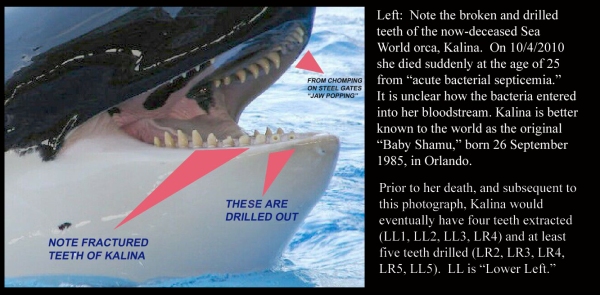
Social strife and boredom accompanying orca captivity also contribute to broken teeth. Steel gates are the primary method of separating orcas prior to training sessions, shows, or when aggressive tensions exist between animals (e.g. Kayla and Kalina). It is common for separated whales to bite down on the horizontal metal bars, or to “jaw-pop†through the gates as they display aggression at each other. In addition, under-stimulated and bored animals also “chew†metal bars and mouth concrete pool corners, like the main stage at SWF. As a consequence, tooth fragments can sometimes be found on the pool bottoms following these displays. This breakage leaves the pulp of some teeth exposed.
If left alone, the decaying pulp forms a cavity that leads to food plugging. The reaction of the orca’s immune system to this plugging is to create inflammation and eventually a focus for systemic infection. Because of the relative youth of most captive whales, the roots of many of their teeth are immature, which makes a root canal procedure impossible. Instead, using a variable speed drill, trainers drill holes through the pulp and into the jaw via an endodontic procedure called a modified “pulpotomy.†This is an uncomfortable husbandry procedure for the whales, which have been observed refusing to participate by sinking down into the water, shuddering, or splitting from their keepers. After “tooth drilling†is complete, trainers must irrigate (flush) the bored out teeth two-three times each day, for the rest of the orca’s life, to prevent abscess, bacteremia, and sepsis. (Kalina’s reported cause of death, “acute bacterial septicemia,†should make one ponder how bacteria entered her bloodstream. See Appendix A). Consequently, orcas at SW and other facilities, like Six Flags, often possess a significantly reduced number of viable teeth, making them poor candidates for release into the wild.
"The Original Baby Shamu" Kalina's broken and drilled teeth
In the medical field it is known that poor dentition can lead to a host of diseases including valvular heart disease, gingivitis, pneumonia, stroke, and heart attack. These open bore holes represent a direct route for pathogens to enter the blood stream where they can then be deposited into the tissue of various organs throughout the body, such as the heart or kidney. Unfortunately, orca necropsies are mostly done in-house, by park personnel, and under a relative cloak of secrecy. So despite the prevalence of poor teeth, it is not known what role they play in captive orca deaths. For example, many whales reportedly die of pneumonia. Could the cause of pneumonia be bacteria carried to the lungs from rotting food plugs or tooth decay? This is unclear due to insufficient research and lack of scrutiny. Along these lines, pathology reports, and other relevant documentation of the lives and deaths of captive orcas are poorly archived at the National Marine Fisheries Service (NMFS), a division of the National Oceanic and Atmospheric (NOAA), the federal agency tasked with tracking captive marine mammal data. Unfortunately, as a means of obfuscating relevant data, marine parks such as SW typically avoid attaching animal names with the cetacean records kept by the aforementioned agencies. Instead, by utilizing code numbers, marine industry claims are difficult to fully investigate.[NOTE: Please see the attached Appendix A for captive orca birth, capture, and death data. This compiled spreadsheet reconstitutes missing and/or coded information contained in the NMFS's Marine Mammal Inventory Report (MMIR), and introduces a new statistic, “Mean Duration of Captivity,†(MDC) measured in days for ease of comparison and computation.]
Orkid and Sumar undergo Teeth Flushing in what is known as "Superior Dental Care" by Seaworld Public Relations
Veterinary and animal care workers at marine parks are under considerable pressure to keep valuable captive assets, such as orcas, alive. As such, it is common practice to administer on-going prophylactic medications such as those that reduce stomach acid production and block histamine, like Tagamet. Stress-related ulcers are common in captive marine mammals and must be dealt with medically. Similarly, the use of antibiotics is often the immediate response to an animal appearing “off†or “slow,†and at any given time one or more orcas may be receiving antibiotics.
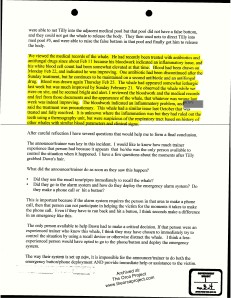
Click on Thumbnail to see Tilikum's Medical Review by APHIS (PDF)
According to a preliminary report prepared by the Investigative and Enforcement Services of USDA APHIS (US Department of Agriculture’s Animal and Plant Health Inspection Service) and obtained via the Freedom of Information Act, Tilikum was on antibiotic and antifungal drugs for an “inflammatory issue†with an elevated white blood cell count beginning “about February 11†(2010) and during the time he pulled Ms. Brancheau to her death. Also in the report, “This whale had a similar issue last October that was treated and fully resolved. It is unknown where the inflammation was, but they had ruled out the teeth using a thermography unit, but were suspicious of the respiratory tract based on history of other whales with similar blood parameters and clinical signs.â€
Pills, such as antibiotics, are typically packed into the morning feeding sessions by pushing them through the gills of herring (fish). The deleterious effects of chronic antibiotic usage are well established, and include disruption of normal bacterial flora in the gut, malnutrition, and susceptibility of the host to opportunistic pathogens such as fungi and yeast. The long-term consequences of other commonly used medications at marine parks are poorly understood, as are the effects of a life spent in water treated with oxidative agents meant to kill E. coli and other pathogens. It is reasonable to expect that as public opinion shifts toward disfavoring killer whale captivity, the pressure on veterinary and animal care staff to utilize prophylactic medications to prevent future deaths will increase. Dead captive killer whales are bad public relations and they serve to fuel the anti-captivity movement.
Wild killer whales can swim a hundred miles daily as they socialize, forage, communicate, and breed. In stark contrast, with little horizontal or vertical space in their enclosures, captive orcas swim only limited distances, with most spending many hours surface resting. Consequently, a random visitor to SWF will almost certainly find Tilikum, and others, statically suspended and without significant movement for long periods. The resultant physical deconditioning amongst captives is poorly understood from a long-term health perspective, as few captive orcas live to old age; however, based upon animal and human studies, one can speculate that the impacts are anything but positive. More obvious are the drastic changes in dorsal fin architecture (bending) that accompany a life spent at the surface. Dorsal collapse is a phenomenon nearly exclusive to captivity as it is rarely seen in wild orcas. 100% of adult captive male dorsal fins have succumbed to gravity versus approximately one percent of free-ranging orcas.
Deceased orca Kanduke's progressive dorsal bending is measured and compared to a wild orca (T20)
Less understood are the consequences from increased ultraviolet (UV) radiation exposure to the skin, eyes, and immune systems as animals float motionless at the surface. Orcas in marine parks sometimes suffer from sunburn, and trainers or animal care staff will apply sun-block and black (colored) zinc oxide to the backs of those animals which show signs of burn, or who otherwise spend inordinate amounts of time surface resting. Furthermore, at least one serious trainer injury has been linked to a whale’s poor visual acuity, possibly secondary to cataract formation. It is known that UV radiation exposure is a factor in the development of cataracts, especially in low latitude environments with elevated sun exposure. Compounding the issue, water in orca tanks is shallow and clear, offering no natural protection from the sun’s harmful rays. Contrastingly, free-ranging orcas spend most of their time at higher latitudes, in darker water, and at greater depths, and none spend time looking up at humans with their heads “on deck.â€In the medical community it is also accepted that UV radiation can act as an immunosuppressant and can cause retinal damage, among other physiological risks. Unfortunately, little is known of the long-term effects on captive orcas exposed to the sun to such an unnatural extent. The USDA-APHIS, which is charged with enforcement of Animal Welfare Act (AWA) provisions such as protection from the weather and direct sunlight, has historically been ineffective in ensuring compliance with the numerous regulations designed to provide minimum standards of care for captive marine mammals.
Tilikum's enormous size is reflected in this photo. Only 2 pools at Shamu Stadium are deeper than he is long.
Orcas are carnivores, not scavengers. In the wild they consume a diet of live (not dead) prey items depending on which cultural subset they come from. For example, New Zealand orcas are known to feed on sharks and rays, while Icelandic and Northwestern orcas eat herring and salmon. Still others feed on marine mammals such as sea lions, porpoise, and baleen whales. Although from diverse places of origin, orcas in captive environments are forced to eat a non-varied diet of carrion. At Sea World this consists of frozen-thawed whole fish, Clupea harengus (herring), Thaleichthys pacificus (smelt), and Oncorhynchus gorbuscha (pink salmon), at approximately 2-3% of their body weight each day. Although staff members at these parks are trained to repeat the script that the fish is of “restaurant quality,†they fail to mention that free-ranging orcas don’t typically eat smelt, which are the size of sardines, and which constitute nearly half of their captive diet. It is not known how refrigeration and freezing of these fish impact the nutritional quality, nor is it known what long-term health consequences arise from feeding captive orcas food inconsistent with their culture. Additionally, since captives receive essentially the same diet every day, they are more susceptible to vitamin deficiencies from a lack of prey variety.Marine parks such as Sea World tout their ability to provide environments adequate to keep orcas alive. However, this claim is not supported by the evidence. Approximately 157 orcas have died in captivity, not including stillborns and miscarriages. Based upon the MMIR data, and represented in Appendix A, we have calculated the mean duration of captivity (MDC) to be less than nine years. This is regardless of whether an orca was extracted from the ocean, or born at a theme park.Globally, marine parks have enjoyed 60 live births since 1977. However, 32 of those animals (53%) are already deceased (Dec.). SW alone has had 28 live births, with nine deceased (32%), as are ten of the mothers. In the wild, successful calf-rearing is facilitated by mentoring mid-wives, family, and stable matrilines. Based on revised estimates by Olesiuk, Ellis and Ford, (2005), and regarding “Northern Resident†orcas, the mean age at first birth has been estimated to be 14 – 15 years. For comparison, captive orcas often become pregnant much earlier. In regard to wild female reproductive lifespan, “single calves are subsequently born at five-year intervals (from the mid-teens) over a lasting about 25 years.†Reproductive senescence (the equivalent of menopause) occurs around 40 years of age.
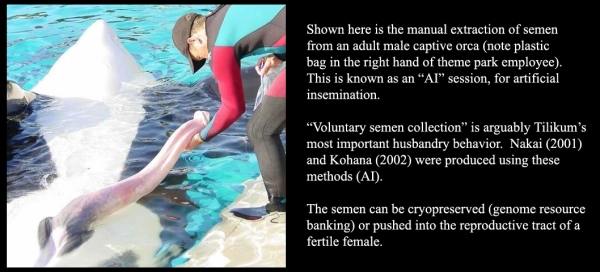
Extraction of Semen from a Male Orca for Artificial Insemination
Giving birth at a young age comes with risks, including immature mothers refusing, or not knowing how, to properly nurse their calves. This is happening currently with a captive orca named Kohana, who is famous as SW’s second AI calf. On loan from SW to Loro Parque, she has recently given birth at eight years of age, in October of 2010. Kohana is not nursing this young orca and it is not clear whether it will survive via bottle and tube feedings. At SWF, Taima was a notoriously poor mother as well. She died from a prolapsed uterus while giving birth to her fourth calf on 6 June 2010, at the age of 20. Keep in mind that killer whale gestation is approximately 18 months in duration, and to reiterate, wild Northern Resident calves are “born at five-year intervals.†Fathered by a transient bull named Kanduke (Dec. 9/20/1990, SWF) and an Icelandic mother Gudrun (Dec. 2/25/1996, SWF), Taima was a true hybrid, unknown in nature, being genetically half-transient and half-resident (transient and resident refer to two culturally and genetically distinct types of orcas). Was she too young at eight years of age to have Sumar (Dec. 9/7/2010, SWC)? It is known that she became very aggressive with him, and for his own protection he was shipped out of Orlando prior to his first birthday. Taima was also eventually banned from performing with trainers in the water, as she was deemed aggressive and unpredictable. As an aside, contrary to the common practice at marine parks of moving young whales to other parks and away from family, wild orcas typically spend their entire lives with family members who, among other things, assist mothers with calf-rearing (see Appendix B for a summary of Kalina’s travel record to various parks).
Keto, Tilikum and Taku Display Dorsal Collapse

In light of Ms. Brancheau’s horrific death, the recent focus of public discourse has been on the safety measures in place at marine mammal facilities, and future steps to prevent morbidity and mortality amongst the human keepers of captive orcas. Safety measures aside, the objective of this article is to identify several key issues related to the whales themselves. It is our hope that a more holistic understanding of orcas within captive environments may lead to better judgments by park managers, the public, and regulatory agencies such as the USDA, APHIS, NOAA, NMFS and the Occupational Safety and Health Administration (OSHA). While parks such as SW should be credited for some of the early research on basic killer whale behavior and physiology, a review of the scientific literature suggests that very little new knowledge is being generated as a result of orca captivity.
Additionally, the authors introduce a new statistic, the Mean Duration of Captivity (MDC), which allows for the evaluation of lifespan in captivity. MDC and lifespan are the same for captive born orcas. We acknowledge that the MDC is not equivalent to lifespan for captured animals. However, it is a valid approximation based upon the historical preference of whale collectors to extract the younger orcas of a given clan or pod. For our population of 152 killer whales that have lived and died in captivity, the MDC equals 2413 days or 6.6 years. This is a surprisingly low number, especially when compared with free-ranging orca longevity. We also acknowledge that husbandry procedures and veterinary care may have improved with time, and that the MDC only addresses dead whales for which data exist (n=152). To incorporate both dead (n=152) and living whales (n=41) we utilized the Kaplan-Meier (KM) method of examining captive orca survival. Employing the median as most representative of the central tendency of the dataset, this method allows “credit†to be given for those whales that are still living, and helps predict orca survival in captivity. According to the records, there are 41 whales currently living at marine parks, and six (Corky, Lolita, Ulises, Katina, Kasatka, Tilikum) that have been living in captivity for greater than 28 years. It is not known what attributes have contributed to their exceptionally long lives (by captive longevity standards). However, expanding the overall population from 152 to 193, to include all whales still alive in captivity (including these long-lived whales), only produces a median duration of captivity of 3108 days or 8.5 years. Using KM, we can be 95% sure that the true median duration of captivity lies between 998 and 3250 days (2.7 and 8.9 years, respectively). Using “Baby Shamu’s†landmark birth as a point when successful captive birthing began, 26 September 1985, the MDC differs little between the pre-Kalina (2453 days = 6.7 years, n=105) and post-Kalina birth cohorts (2323 days = 6.4 years, n=47). Though the data suggests that the post-Kalina birth cohort whales are living shorter lives, the MDC between the two is not statistically significant. The time has come to evolve beyond keeping killer whales confined in small, unnatural spaces, purely for entertainment purposes. As we’ve demonstrated, their life spans are decreased and their behaviors altered from the stressors associated with confinement.
Katina and her two offspring, Taku & Kalina. Before his death, Taku and his mother Kalina produced an inbred calf, Nalani.
One solution, which has already been proposed, and we support, would be to phase out captive populations naturally, via attrition. In short, stop breeding the animals and let those already in captivity live out their lives. Animals such as Lolita at the Miami Seaquarium, whose mother and family group are still alive, and whose teeth are in relatively good shape, may be candidates for a transitional reintroduction to the wild. However, whales with broken and bored teeth, such as Tilikum, and many others, are likely poor candidates for release back to their natural habitat without ongoing human intervention. Jeffrey Ventre, MD, is a medical physician specializing in physical medicine and rehabilitation in New Orleans. John Jett, Ph.D, is a visiting research professor focusing on waterway management issues at Stetson University.Click HERE to view Appendix A - Click HERE to view Appendix BClick HERE to Open/View/Print the Complete Paper and Appendices (PDF)Both Drs Jett and Ventre worked as trainers at Sea World of Florida for a combined total of 12 years. They worked with several orcas, including Tilikum, and with Dawn Brancheau. After SeaWorld, they began professional careers that allow for this unique perspective. The authors thank Wendy Cooke, John Kielty, Samantha Berg, Carol Ray, Kim Ventre, Howard Garrett, Colleen Gorman, Chica, and Tim Zimmermann for their contributions to this paper.
$375 reward for information that leads to the SAFE RETURN of Wylie who was stolen from the Irving Animal shelter in Irving, TX at 12 noon Saturday, January 15th, 2011 by a white male in his 40's wearing jeans, white tennis shoes, a blue cap with a logo and a carhart type coat. He was accompanied by a blonde female who is also in her 40's.
Wylie is a white, 7 month old, male, Argentine Dogo mix. He is approximately 50 lbs. and is friendly.
****One of the people who stole Wylie****
****People who stole Wylie****
$375 reward for information that leads to the SAFE RETURN of Wylie who was stolen from the Irving Animal shelter in Irving, TX at 12 noon Saturday, January 15th, 2011 by a white male in his 40's wearing jeans, white tennis shoes, a blue cap with a logo and a carhart type coat. He was accompanied by a blonde female who is also in her 40's.
Anyone with ANY information PLEASE call Irving Police at 972-273-1010 or the shelter at 972-721-2258 or 972-721-2259 or 972-721-2256 AND email laura at lforsythe@cityofirving.org ASAP
Pets are such a source of joy; science has proven that having an animal companion provides many physical and psychological benefits. But America’s more than 160 million owned dogs and cats surely impact the environment.
Christie Keith is a contributing editor for Universal Press Syndicate's Pet Connection and past director of the Pet Care Forum on America Online. She lives in San Francisco.
So, you got up one morning, looked in the mirror, and vowed to reduce your carbon footprint. That backyard composting project you'd been putting off for years? Definitely time. The stack of newspapers by the kitchen table? Going to the recycling center this week, you swore.
And then your cat rubbed against your ankles, asking for her breakfast. You opened the box of cat food and shook the last of the kibble into her bowl, and tossed the empty box into the trash. The noise brought your dog into the kitchen, looking for a walk and his breakfast, too.
While you were driving the few miles to the dog park, you hit the drive-through espresso place, your engine idling while you waited your turn. You sat on the bench at the park watching your dog play with other dogs, sipping a latte and chatting with other early-morning dog walkers, maybe about your newfound resolution to be a better environmental citizen.
You called your dog, hoping he'd pooped while you were otherwise distracted, threw your empty coffee cup into the trash can, and headed back home. You didn't stop at the bank or post office because it was too warm to leave the dog in the car, so you'd have to make a second trip later that day.
When you got home, you opened a can of dog food and mixed it with some kibble. You threw the can away, and then dumped your cat's litter into a plastic bag, and threw that away, too. Then you got back in your car to do those errands you'd had to put off when you were out earlier with the dog.
This isn't a lesson in spotting hypocrisy, nor even a subtle message that people who let their dogs poop without picking it up are jerks. (Although they are — so much for "subtle.") It's really nothing more than a checklist of a few of the ways humans impact the environment with the decisions we make about caring for our pets.
In this column, I'm going to look at the environmental impacts of pet ownership, some of which are fairly obvious and some of which most of us rarely consider. Then in my next column, I'll examine the solutions to these problems, and even provide a glimpse into ways that sharing our lives with companion animals improves the planet.
What goes in must come out
From that not-​so-​fragrant pile on the sidewalk to the cat litter box hidden in the laundry room, the biggest piece of the pet pollution puzzle is poop. Whether you dispose of it in the trash, flush it or leave it where it falls, it's a problem.
America's 73 million dogs produce around 10 million tons of dog poop per year — 6,500 tons of that in San Francisco alone, making up around 4 percent of the city's total residential waste. The litter from America's 90 million pet cats results in around 2 millions tons of cat litter being sent to landfills each year. Making the problem worse, clay-based litters aren't biodegradable, as they're already in their final state of decomposition.
While there are regional composting operations that accept dog and cat waste (I'll have more on that in my next column, as well as on an innovative San Francisco solution to the dog poop problem), getting rid of used cat litter and dog feces is one of the most difficult challenges for the green-minded pet owner. Feces left in gardens, parks, empty lots, and on the streets will run off into storm drains and waterways, contaminating them with bacterial waste that can cause human and wildlife diseases.
Compliance rates on canine pooper-​scooping vary wildly from community to community. Some areas actually hire commercial poop removal services because local dog owners aren't picking up after their pets, while many dog parks are self-policed to such an extent that before your dog has finished squatting, six people are hollering at you: "Clean up after your dog!" But even the most conscientious poop-scooping dog owners might be picking up their dog's feces with a plastic bag, creating serious problems as the degradable poop is sealed inside a non-degradable bag that will spend something close to eternity in the landfill, along with a couple million tons of similarly-​enshrouded cat litter.
While dog feces can be safely disposed of in the toilet, used cat litter should never be flushed. Modern waste treatment doesn't kill a pesky organism known as toxoplasma gondii. When water containing this parasite enters the ocean, it sickens and kills sea otter populations. Toxoplasma also causes disease in humans, especially the immune-​compromised and pregnant women.
Disposing of used cat litter is only half the problem. The other half is figuring out what to use as litter in the first place. Clay-based cat litters are not a by-product of the manufacture of something else, but produced by strip mining. The clay, known as bentonite, is found under several layers of soil, which are removed in the mining process. The first few inches of clay are discarded, and the final clay is removed and processed into cat litter. When it comes to "green" products, you don't get much less green than that. (Some more planet-​friendly options will be discussed in my next column.) [posted below]
Back to 'what goes in'
In addition to the difficult problem of pet waste, there's also the stuff that creates the waste in the first place: pet food. Just as with human food, pet food is the tip of the iceberg on a whole host of environmental challenges.
Even people who spend hours at Whole Foods reading labels and querying the butcher about the life and death of that night's dinner often just grab the nearest brightly-​colored sack or box for their pets. I used to argue with the owner of a small health food store in Sonoma County -- who wouldn't even sell organic or grass-fed meat or chicken for people because she believed eating animals was cruelty -- about the really terrible pet food she carried. Not only were they low in quality but their meat sources were far less consistent with her store's supposed humane and ecological values than the free-range and organic meats she wouldn't carry.
If you're a consumer who is concerned about the impact of factory farming on the environment (and if you think cat poop is a problem for the environment, let's talk about high-volume hog farming sometime), the source of the meat products in your pet's food deserves as much scrutiny as the source in your own. If you only buy locally grown, organically raised produce, try to support sustainable methods of agriculture, and seek out meats raised and slaughtered in ways you find humane, you might be surprised to find out how hard it is to apply those same standards to your pets' food.
It can also be harder to "buy local" when using commercial pet foods. Even companies located nearby might manufacture their foods in plants in other states, using ingredients shipped in from all over the world. Nearly every vitamin supplement used in this country is made in China, and, as this year's pet food recall taught us, so are many of the raw ingredients of pet foods. The environmental cost of packaging, shipping, storing, and distributing those sacks and cans of pet food has to be tallied, along with the convenience of using them.
Speaking of packaging, how do you dispose of the empty containers? While dog poop might make up 4 percent of San Francisco's solid waste, product packaging makes up one-third of the stuff sent to landfills. Boxes, bags, and food containers make up the single largest segment of that sold waste stream, although there are no statistics indicating what percentage of that is from pet food. But every pet food can, box, pouch or sack tossed in the trash ends up in a landfill. While some pet food manufacturers, such as San Diego's Honest Kitchen, are switching to post-consumer recycled packaging, and some packaging, such as cardboard boxes, is easily recycled, pet food product packaging unquestionably makes a bad situation worse.
Cheap plastic imported crap
If the pet poop problem reminds anyone of the disposable diapers problem, then it won't be a surprise to know that pets and kids share another issue: toys.
Imported plastic toys in bright colors fill the aisles of pet supply stores pretty much the same way they fill the aisles of toy stores. Manufactured in countries where environmental regulations are lax or irregularly enforced, shipped into and all over the United States, these cheap goods usually don't last long. The broken toys end up in the landfill and we head back out into the stores in search of yet more cheap plastic crap.
Unlike children, who have their consumer desires fostered by a whole marketing machine aimed right at them, our pets really don't care if they have the same cool stuff as the cat and dog next door. In fact, cats are usually much happier with a paper bag to play with, and our dogs can't see those bright plastic colors in the first place. We're buying that stuff for us, not for them.
Location, location, location
We drive our pets to the groomer, the vet, the park, doggy day care. Their food, toys, combs, brushes, and other supplies are shipped from locations all over the country, or even all over the world. When you get right down to it, it's all about the gas.
Of course, not every pet owner lives walking distance from a park, veterinarian, groomer, or doggy day care any more than they live near their children's schools, their hairdresser or their own workplaces. Sometimes that twice-daily drive to the dog park is a necessity rather than a choice. And because it's not a good idea to leave dogs in the car while we do other errands, particularly on warm days, it's hard to bunch trips to the dog park with grocery shopping and returning the DVDs. Because dogs suffer more from heat than humans do and driving with the windows open isn't always safe when there are pets in the car, sometimes we have to use our air conditioners more when transporting the dog.
But whether a matter of choice or necessity, all those miles of driving have a cost, one we pay for once at the gas station and again in environmental harm.
Drugs, shampoos, and chemicals
People rarely dispose properly of their own unused medications and garden pesticides, and this is no less a problem when it comes to drugs and chemicals used for our pets. Unfortunately, knowledge about proper disposal of chemicals or the waste of animals who are on certain medications is not widespread, and many people have simply never thought about the issue at all. But from the shampoo you cheerfully rinse off your dog in the backyard to the medications you flush down the toilet (or into the storm drain in your pet's urine or feces) or the flea and tick control product containers you toss into the trash can, the contamination of the country's water supply with antibiotics, pesticides, and industrial chemicals is a problem that, while not limited to pets, certainly includes them.
These unwanted residues are known as "emerging pollutants of concern" or "​microconstituen​ts.​"​ When they enter the environment, even at very low levels, they can help contribute to the development of drug-resistant bacteria, affect the central nervous systems of animals exposed to them, contaminate ground and surface water, and harm aquatic life such as fish and frogs.
The great outdoor cat debate
Because the indoor-outdoor cat debate is such a vast and contentious issue, it definitely deserves its own column. I promise it's coming in the future, but for now, let's just say that whichever side in this unending battle is right, there's no argument that free-roaming pet cats urinate and defecate in other people's backyards, vegetable gardens, and planter boxes, and cats can have at least strong localized impacts on wildlife. Cats who are kept indoors have a much smaller carbon paw print than cats who are free to roam, but, depending on location and who you ask, half or fewer of all cats live indoors all the time.
What you can do
I'm a pet writer, a lifelong dog and cat owner (although currently catless), and a passionate believer in the bond between humans and animals. All our decisions, including those we make about our pets, impact the planet in some way. In my next column, I'll cover the many ways that pet owners can reduce the carbon paw print of their dogs and cats, and one way in which pets actually reduce environmental damage and help make the planet a healthier and better place for all species.
Want to lighten the load just a little? America's pet product manufacturers are ready to help. Welcome to the wonderful world of recycled and recyclable pet products!
The outside story. Pet food, pet toys, pet supplies, pet cleaning and grooming aids, pet medications -- pretty much all of it has one serious environmental problem, and that's packaging. Just as with products intended for humans, those seeking to be more eco-friendly should try alternatives such as bulk buying and using products that come in recycled and recyclable packaging.
Even cardboard boxes used for dry pet foods are not always recyclable, as some of them are lined with metal or plastic to prevent food spoilage. Check the bottom of the packaging for recycling information.
Always dispose of drugs, pesticides, shampoos, chemicals and the containers they come in safely. Federal guidelines for the safe disposal of human medications apply to veterinary drugs as well. Flea control products, as well as many pet shampoos and dips, need to be disposed of carefully as well, according to EPA, state, and local guidelines.
The inside story. Then there's the stuff itself. Fortunately, there's no shortage of pet toys and supplies made with recycled, degradable, and recyclable materials -- in fact, annual sales of "green" pet products are estimated to reach over $1 billion this year. So for your own pets, or the eco-friendly pet owners on your holiday shopping list, consider some of these toys and supplies:
• SmartyKat A complete line of cat toys, treats, and beds using recycled and recyclable materials. Some favorites include the SuperScratcher,​ as well as several play-​encouraging and interactive toys.
• PoochPlanet From the same folks who brought us SmartyKat, dog toys, treats, and beds made with recycled materials -- including a line of dog beds filled with recycled plastic bottles. According to the company, their customers kept 30 million recycled bottles out of the waste stream last year alone.
• West Paw Design This Montana-based company makes dog and cat toys and beds using recycled and organic materials, including the popular Organic Bumper Bed and the Eco Nap Mat.
• Planet Dog This company makes two toys out of pre-consumer recycled materials, and the toys themselves are recyclable. They also make collars, leashes, and harnesses using hemp, a sustainable, degradable, and recyclable fiber.
• Everyday Studio Cat Trees Designed by San Francisco artist Susan Kralovec, these cat trees are made of corrugated cardboard, with 35 percent minimum recycled content. Materials are non-toxic and low VOC.
• Earthbath Grooming Products They're free of phosphates and enzymes, and are biodegradable. They also sell in bulk for professional use, or for those who want to minimize packaging waste.
Where's it from? The pet food and toy recalls of products made in China have made most of us aware that many things we buy for ourselves and our pets are made all over the globe, and that not all countries have similar manufacturing standards. Even products made locally might contain ingredients and materials that came from all over the world, with the attendant ecological fuel cost.
Some companies, such as PlanetDog.com, have made a commitment to re-locating their manufacturing plants closer to their market. Others like West Paw started out with that commitment, and still make their line of dog and cat toys and beds in Bozeman, Montana. Always investigate where the products you buy for your pets are made, as well as how far the ingredients and materials used to make them had to travel to get there.
Pet service businesses. Businesses use stuff, too. If you're looking for an eco-friendly place to board your dogs and cats, San Francisco's Pet Camp was founded by two former EPA staffers, and is certified as a Green Business by the City and County of San Francisco. While they're the only pet-related business to receive such certification, eco-aware pet owners might want to check with other pet service businesses they use. Does your dogwalker use biodegradable poop bags? What kind of shampoo does your groomer use?
Bigger Changes: The Ins and Outs
First, the "out." Pet poop is polluting storm water and, when it is enshrouded in non-degradable plastic bags, taking up landfill space. High levels of canine-origin fecal bacteria have been found in bodies of water into which surface water drains, and sea otters have been sickened and killed by a parasite found in the feces of some cats. Many common brands of cat litter are non-degradable and are produced by strip mining. So what do you do with all that pet waste?
When it comes to pet poop, there are a few options.
For used cat litter, the situation is less clear. Some litters are produced specifically to be flushable, and for cats who don't carry the parasite Toxoplasma gondii, that's a good solution. But around half of all cats do, and their feces should not be flushed. Even those indoor cats who were infected in the distant past can, under some circumstances, still shed cysts in their feces, so before you decide your cat is one of those who don't, have your veterinarian run a T. gondii titer test on your cat. If the test is negative, and your cat has no opportunity to eat soil, prey or any form of raw meat, then you're probably safe to put flushable cat litter down the toilet.
Toss it. Big dogs mean big poop, and lugging dog waste back home and flushing it isn't always the most practical solution. The next-best course is to use a degradable scooper and toss the poop in the trash.
If your plumbing system can't handle flushable cat litter, or your cat is T. gondii positive, goes outdoors, eats raw meat, or doesn't like flushable cat litter, the next-best option is to use a degradable recycled litter and dispose of it in the trash in a degradable container such as a paper bag. Litters are available made from post-consumer newspaper, as well as degradable plant materials such as wheat, corn, and cellulose. Clay litters are produced by strip mining and do not degrade, so unless your cat is one of the ones who doesn't care about the environment but does care about his special litter not being replaced, they're not the best ecological choice.
Products that can make tossing pet waste more eco-friendly include:
• Scooperbox , a fully degradable cardboard scooper made from 100 percent recycled materials.
• Dispoz-a-scoop combines the best of both methods, and is a degradable plastic bag with a rigid cardboard frame.
• Feline Pine Made of reclaimed pine dust from lumber yards. Degradable. The company says the product is flushable but labels the product with a warning about T. gondii transmission.
• Yesterday's News Made from recycled newspaper -- the company says a "significant portion" of that is post-consumer, and also says that "most" publishers today use safe inks, and their manufacturing process neutralizes all ink residues. Degradable but not flushable.
• SWheat Scoop Made from wheat. Degradable, and claims to be "the only litter on the market that's certified flushable in sewer or septic systems by the SGS U.S. Testing Company."
• Green Tea Leaves Litter Made of pre-consumer manufacturing waste, this litter contains just wood dust and green tea. It clumps, it controls odor, and it's degradable and flushable.
Let it rot. Can you compost pet waste? It depends on who you ask. Pretty much everyone recommends against using compost made with any fecal material on food crops, but studies done in Alaska found that properly handled compost made using dog poop got hot enough to break down into clean, usable compost.
If you want to try composting dog poop and used degradable (non-clay) cat litter in your own garden, CityFarmer.org has step-by-step instructions and even a video demonstration. You can also try one of a number of in-ground mini-septic systems such as the Doggie Dooley Pet Waste Disposal System.
Many cities around the world are trying different approaches to dog waste disposal. San Francisco is testing a method that doesn't just reduce the dog poop carbon pawprint, but creates energy instead of waste. Sunset Scavenger processes dog poop in a methane digester, where bacteria turn the waste into methane gas. Methane can be used just like natural gas, and can also be used to produce electricity.
Now, the in: Food. If supporting humane and sustainable agriculture with your shopping dollars is important to you, consider making your pets' food yourself, out of fresh, locally produced ingredients. That way, you can control the quality of the ingredients just as you do in your own diet, and also eliminate all the wasteful shipping, storing, packaging, and advertising that goes along with the multi-billion dollar pet food industry.
I've been making my pets' food for almost 23 years now, and it's easier than most people think, but if it's not for you, some commercial foods are more eco-friendly than others. It's not enough just to buy foods that claim to be "natural" or "healthy," but meats, grains, and vegetables that are produced in accordance with the regulations of the California Certified Organic Farmers and other independent third-party certifiers such as Oregon Tilth must meet certain standards of sustainability in their production. There are also small, local companies that may be producing pet foods using locally grown, sustainably produced ingredients. A few companies that offer sustainably raised and/or certified organic meats in their pet foods:
• By Nature Organics Organic products are certified by Oregon Tilth. They make both dry and canned cat and dog foods. Not all foods are organic, so read labels.
• Castor & Pollux Organics A complete line of both canned and dry cat and dog foods, plus treats. Products vary in how much of their content is organic. USDA Organic certification.
• Primal Pet Foods Their produce is certified organic, and they claim "All of our meats, poultry and game are purchased through farms and ranches that take pride in producing wholesome sources of protein through natural, sustainable agriculture." Their foods are sold frozen and are intended to be fed raw. They are located in the San Francisco area.
• Karma Organics Dry food and treats for dogs using 95 percent certified organic ingredients, including meat. USDA Organic certification.
Dogs and cats are both members of the order carnivora, and evolved eating the flesh of prey animals. Some people worried about the environmental impact of meat diets want to make their carnivorous pets into vegetarians or even vegans. Although a vegetarian diet is possible for both species, a vegan diet is at best controversial and at worst, dangerous for an obligate carnivore such as the cat.
For those who want what's best both for their pets and the planet, there's a middle road. Most of meat's bad rap belongs not to livestock raising per se, but to industrialized,​ high-volume farming practices. Locally, groups such as SF Raw seek out small, local farmers and ranchers who raise their livestock using sustainable methods such as pasturing and grass feeding, and practice environmentally​ careful agriculture, and buy their meat, eggs, and other products in bulk. This saves money as well as minimizing shipping. Groups like this one exist nationwide and are listed at DogAware.com.
Not convinced? Although dogs and cats are the most popular pets in America, there are many herbivorous animals who make wonderful companions. By no means should anyone give up their current pets, but if the consumption of meat is an important issue for you, consider a pet such as a rabbit in the future. Rabbits make wonderful companions, and there are many of them in need of homes. And, as pet columnist Gina Spadafori writes, ecologically, it doesn't get much better than a bunny:
A rabbit is better than a garbage disposal. It's true: You can give a rabbit all your green kitchen trimmings and he'll eat them with enthusiasm, no electricity required. Then he'll produce lovely waste that will super-charge your compost pile, providing you eventually with the most luscious rich compost for your garden. So you can grow more lovely vegetables, giving him the trimmings, and on it goes. The circle of life, without the petro-​chemicals!​
Indoor vs. outdoor cats. While this doesn't exactly match the "in and out" I was talking about, cats who roam freely do have a greater impact on the environment than cats who are kept indoors or only allowed into safe outdoor areas. Because it's a big topic, the indoor/outdoor cat debate and ideas for enriching the lives of indoor cats will be the subject of a future column. Nevertheless, it's a fact that keeping cats indoors with access to safe outdoor enclosures will protect wildlife from their predation, keep cat feces and urine from contaminating soil and water, and prevent your cats from contracting T. gondii. If your cats do roam, consider using a collar with a bell on it to alert birds to their presence. And while I've never tried it, there's also a cat bib that supposedly prevents cats from harming birds.
The Biggest Step of All: Thinking about it another way
It may seem that humans keeping and caring for companion animals puts a strain on the planet. But the balance isn't as unequal as it might seem at first glance. Sharing our lives and homes with animals has the potential to make us better environmental citizens -- and better people, too. I know, because that's what happened to me.
Back in the 80s, I was the typical over-achieving workaholic. I lived in San Francisco, stopped every morning for my triple-shot latte at the CafŽ Flore, and spent the whole day indoors working, and most of my evenings in clubs, theaters, and restaurants. My main form of recreation was shopping.
And then in 1991 I adopted my dog Colleen from the Peninsula Humane Society, and all of that changed. Every morning I went to the dog park or the beach, and every evening I walked her all around our quiet neighborhood. I started seeing things I'd never paid any attention to before: The stars. Flowers growing on the side of the road. Birds in the trees and the skies. On our trips to the Bay Area's state and county parks, we saw bobcats, coyotes, snakes, and jackrabbits. Once I even saw a mountain lion off in the distance. I began not just to see but to care about the natural world in a way I never had before.
Even if it can be challenging to reduce our pets' carbon pawprint, I'd argue that their net ecological impact is positive. That's because in seeing the world through the eyes of our animals we come to both know and care about the natural world. The saying "God invented the cat so that man might caress the tiger" doesn't only mean that we get to have a tiny bit of the wild in our laps at night; it also means that a little piece of our heart goes out into the wild.
Perhaps most importantly, the human-animal bond fosters compassion not just for our pets, but for all living creatures -- other humans included. An open heart is never a bad thing, for us, for the planet, and for the other people and animals with whom we share the earth.
One last word about recycling. My dog Colleen was one of the millions of second-hand animals who are waiting for a home in America's shelters, pounds, and rescue groups. They say love is better the second time around, so if you're ready to bring another pet into your home, perhaps you can practice some of what I've preached on an animal who needs a second chance.
Please for the love of God help Tony before he dies from neglect. We will never give up our battle to help Tony!
As the month of July 2010 approaches, so does Tony's birthday, but it will not be a happy one. He will be ten years old, but he will also have spent all of those ten years exploited as a gimmick at the truck stop. Please continue to be a voice for Tony and support efforts to give him the home and life he deserves.
Tony, a tiger held at the Tiger Truck Stop in Gross Tete, Louisiana, lives in a chain link and concrete cell surrounded by idling truck engines and diesel fumes -- 24 hours a day, 7 days a week. Tony can never escape the noise, the flood lights and the boredom as he paces back and forth. Due to the harassment he receives, a sign asks people not to throw rocks at him.
Carole Baskin, Founder and CEO of Big Cat Rescue of Tampa FL , has offered Tony sanctuary but Tony’s owner, Michael Sandlin, refuses.
ACT NOW!
In December 2010, the permit allowing Sandlin to continue his exploitation of Tony is up for renewal. Please write Louisiana representatives to deny this renewal and to end to the private trade of tigers.
Send a letter (using Big Cat Action Alert’s one-step form) urging the USDA, Louisiana Dept. of Wildlife, US Fish and Wildlife Service and more to end to the trade in tigers in private hands.
Iberville Parish Council passed legislation in 1993 that prohibits private ownership and display of exotic animals, including tigers. When animal welfare groups attempted to have the law enforced, Sandlin fought for an exemption. The Iberville Parish Council amended the law in his favor on 14 December, 2009. Sandlin’s website now asks that a female be donated for breeding to perpetuate the exploitive cycle. According to Big Cat Rescue, there already more tigers languishing in captivity than in the wild.
This is where Tony lives now.
And this is where he could live. Carole Baskin of Big Cat Rescue of Tampa, FL talks about the care these tigers require and the need for legislation and enforcement to spare them from the perils of exploitation and abuse.
Lend your voice for Tony today. Together, we can push those in power to make the last 5-10 years of this caged tiger’s life a peaceful experience and stop future abuse.
BtC4animals.com never asks you to spend a cent, just a few minutes of your time. It’s the greatest gift you can give.
Free Tony the TigerLend your voice for Tony today. Together, we can make the last 5-10 years of this caged tiger's life a joyful experience.Ian Somerhalder Foundation RTs For Tony « Free Tony The TigerTagged with Damon Salvatore, Free Tony The Tiger, Free Tony Tiger, ian somerhalder, Ian Somerhalder Foundation, IS Foundation, Louisiana, The Vampire Diaries, Tony The Truck Stop Tiger, truck stop, Twitter · « Recent Picture of Tony On ...Free Tony the TigerThe Humane Society of Louisiana is backing the "Free Tony the Tiger" campaign and you can too. Sign the petition to rescue Tony from his concrete kingdom and pray that the truck stop's permit is not renewed. ...Free Tony The Tiger Included In: Giving Voice to the Voiceless ...Free Tony the Tiger: Tony lives a miserable life as the sideshow attraction at Tiger Truck Stop in Louisiana. Somehow, the truck stop owner keeps getting exemption after exemption to keep Tony locked up. This year, advocates from around ...
All the royalties from this lens are being donated to Big Cat Rescue and I hope that one day Tony the Tiger will be under their care and living the rest of his days in more appropriate surroundings.
Devoted to rescuing and housing exotic cats who have been abused, abandoned, bred to be pets, retired from performing acts, or saved from becoming fur coats, and to educating the public about them.
Petitions to Free Tony the Tiger
Sign up for Tony
As at July 29, 2010 8,974 people have signed these petitions, please join them!
Boycott TIGER TRUCK STOP | Change.org By signing this petition you are agreeing to boycott Tiger Truck Stop in Grosse Tete Louisiana. Location: Tiger Truck Stop I-10, Exit 139 76730 Garner Lane Grosse Tete, LA 70740 Tony the Tiger of Kelloggs should be an Advocate for his brother Tony at Tiger Truck Stop | Animals | Change.org Tony The Truck Stop Tiger Tony is a nine year old Siberian/Bengal tiger who has lived his whole life at a truck stop in Grosse Tete Louisiana. His home is one of concrete and steel, amid the deafening noise and noxious fumes of cars and trucks 24 hours a day. It is angering as well as sad to see thi Boycott ConocoPhillips | Animals | Change.org While ConocoPhillips is the supplier to a marketer called Brookshire Brothers, who in turn provides Tiger Truck Stop with fuel, it is ConocoPhillips' name and reputation associated with Tiger Truck Stop. Urge The LDW&F Not To Renew Tiger Truck Stop Permit | Animals | Change.org Off Interstate-10 at exit 139 is Tiger Truck Stop which uses a live Siberian/Bengal tiger named Tony as a gimmick and roadside attraction. A 1993 Iberville Parish County Ordinance prohibited the display of wild exotic animals as pets but was never enforced. The ordinance was amended on March 17, 2009 to allow Tony's owner Michael Sandlin to keep Tony.
These bloggers are campaigning to Free Tony the Tiger
Websites, blogs and pages dedicated to Tony the Tiger
Please add your voice to these campaigns to Free Tony the Tiger
Free Tony The Tiger The Free Tony the Tiger website Free Tony the Tiger on Twitter Tony is a tiger who is used as a roadside attraction at a truck stop in Grosse Tete LA. He will be there 10 years in July. Please support efforts to help Tony. Facebook: Set Tony the Tiger Free Facebook Group dedicated to freeing Tony the Tiger Free Tony The Tiger | Facebook Welcome to a Facebook Page about Free Tony The Tiger. Join Facebook to start connecting with Free Tony The Tiger. Free Tony Big Cat Rescue is the world's largest accredited big cat rescue facility. More than 12,000 pages of big cat facts, photos, games and sounds. Your visit saves lives. Save Tony the Truck Stop Tiger | Facebook Facebook Group trying to save Tony the Tiger Tiger News Tiger News From Around The World. "The greatness of a nation and its moral progress can be judged by the way its animals are treated" Free Tony The Tiger - Tony's Blog Free Tony The Tiger is dedicated to helping Tony a 9 year old tiger who lives at a truck stop in Grosse Tete Louisiana. We support Tony being moved to an accredited big cat sanctuary. Does ANYONE Care About Tony The Tiger??? - CNN iReport Does ANYONE Care About Tony The Tiger??? No, not the famous cartoon mascot for the world's leading cereal producer. The Tony the Tiger I speak of is a real, live Siberian/Bengal tiger who is uSource for links: http://www.squidoo.com/free-tony-the-tiger#module101446801
Today is a conjunction of your life. Today is where your whole life is pinned together off to one side. All the corners of your life are gathered together the way the hem of a fancy ball gown might be pinned with flowers. The past is gathered, pulled to one side, and now there is a whole new start to today, you, and your life.
The past is gathered together in one piece so it is out of the way. You don’t have to step around it nor do you have to start where you left off. You can start anywhere. The past is not about you unless you insist it is. This is a new slate before you now. No matter what labels have been stuck to you, today you have a new start. Today is a whole new day. In this sense, you can undo the past. You can make today anything you want, for the truth is, whatever build-up from the past you have accrued, you can drop it now.
Today you have a new start, and I suggest you start anew. Whatever thoughts you have had about yourself, start over. A new beginning. No matter how wonderful the credits of the past may have been, today you are starting a new journey to the New World of Space and Time.
The Old Book has closed, and today a New Page is open before you. All the past has drifted off somewhere, filed away, and yet not kept. You are free today to be as you want to be. If your life has been beautiful, today your life is yours to make more beautiful. If the past has not been glorious, today is perfectly willing for you to make it glorious. Today is innocent, as innocent as you, beloveds.
If you have limped through life, today you can dance. If you have sung sad songs, today you can sing a happy song. And why not? Why stick with the same old songs? If today is a new day, why not a new song? You can make it up as you go along.
Do not feel you will lose your place in life by doing new things today in a new way, or even doing old things today in a new way. You can take the same bus or take a new bus or walk or skip or simply be a new you on the same bus.
Why not surprise yourself and others by enjoying today? Why would you prevent yourself from having great joy today? You were meant for joy, so why not have it and give it and have it and give it again and again today?
Do you really think that I keep an old book of records and look you up on it? Do you really think that I keep an accounting of all your thoughts and acts, a list of merits and demerits? I do not. I am not a bookkeeper. I am a Lover. Love keeps no records. Why would I? Why would I call you to task? Why would I go there? I am not like an accountant. I am God ever as I have always been. I am not caught up in the past.
How could I tell you to let go of the past unless I Myself let go of the past? It isn’t even that I let go of the past. It was never My idea to keep it. It is not My style. I keep My heart and My vision. I never lose sight of them. What is the past to Me? Where I live, there is no time. Where in Eternity and Infinity can the past be kept? Past-keeping is an activity of the world. Why oh why would I even consider hanging on to the past even if I could? Of what use is the past to man or God?
Love, Compassion, and Tolerance by His Holiness the Dalai Lama
“Love, compassion, and tolerance are necessities, not luxuries. Without them, humanity cannot survive.â€
The essence of all religions is love, compassion, and tolerance. Kindness is my true religion. No matter whether you are learned or not, whether you believe in the next life or not, whether you believe in God or Buddha or some other religion or not, in day-to-day life you must be a kind person. When you are motivated by kindness, it doesn’t matter whether you are a practitioner, a lawyer, a politician, an administrator, a worker, or an engineer: whatever your profession or field, deep down you are a kind person. Love, compassion, and tolerance are necessities, not luxuries. Without them, humanity cannot survive. If you have a particular faith or religion, that is good. But you can survive without it if you have love, compassion, and tolerance. The clear proof of a person’s love of God is if that person genuinely shows love to fellow human beings.
To have strong consideration for others’ happiness and welfare, we must have a special altruistic attitude in which we take upon ourselves the burden of helping others. To generate such an unusual attitude, we must have great compassion — caring about the suffering of others and wanting to do something about it. To have such a strong force of compassion, we must have a strong sense of love that, upon observing sentient beings, wishes that they have happiness — finding a pleasantness in everyone and wishing happiness for everyone, just as a mother does for her sole sweet child. To have a sense of closeness and dearness for others, use as a model a person in this lifetime who was very kind to you. Then extend this sense of gratitude to all beings.
Deep down we must have real affection for each other, a clear realization or recognition of our shared human status. At the same time, we must openly accept all ideologies and systems as a means of solving humanity’s problems. One country, one nation, one ideology, one system is not sufficient. It is helpful to have a variety of different approaches on the basis of a deep feeling of the basic sameness of humanity. We can then make a joint effort to solve the problems of the whole of humankind.
Every major religion has similar ideas of love, the same goal of benefiting through spiritual practice, and the same effect of making its followers into better human beings. All religions teach moral precepts for perfecting the functions of mind, body, and speech. All teach us not to lie or steal or take others’ lives, and so on. The common goal of all moral precepts laid down by the great teachers of humanity is unselfishness. Those teachers wanted to lead their followers away from the paths of negative deeds caused by ignorance and to introduce them to paths of goodness. All religions can learn from one another;their ultimate goal is to produce better human beings who will be more tolerant, more compassionate, and less selfish.
Human beings need spiritual as well as material sustenance. Without spiritual sustenance, it is difficult to get and maintain peace of mind. The purpose of religion is not to argue which one is the best. Over the past centuries, each great teaching has served humanity, so it’s much better to make friends, understand each other, and make an effort to serve humanity than to criticize or argue. Buddha, Jesus Christ, and all other great teachers created their ideas and teachings with sincere motivation, love, and kindness toward humanity, and they shared it for the benefit of humanity. I do not think those great teachers created differences to make trouble. Our human mind always likes different approaches. There is a richness in the fact that there are so many different presentations of the way.
There are two ways to enter into Buddhism: one through faith and one through reasoning. Faith alone may not be sufficient. Buddha always emphasized a balance of wisdom and compassion: a good brain and a good heart should work together. Placing importance on just the intellect and ignoring the heart can create more problems and more suffering in the world. On the other hand, if we emphasize only the heart, and ignore the brain, then there is not much difference between humans and animals. These two must be developed in balance, and when they are, the result is material progress accompanied by good spiritual development. Heart and mind working in harmony will yield a truly peaceful and friendly human family.
I feel that my mission is, wherever I am, to express my feeling about the importance of kindness, compassion, and the true sense of brotherhood. I practice these things. It gives me more happiness, more success. If I practice anger or jealousy or bitterness, no doubt my smile would disappear.
The real troublemakers are anger, jealousy, impatience, and hatred. With them, problems cannot be solved. Though we may have temporary success, ultimately our hatred or anger will create further difficulties. Anger makes for swift solutions. Yet, when we face problems with compassion, sincerity, and good motivation, our solutions may take longer, but ultimately they are better.
When I meet new people, in my mind there is no barrier, no curtain. As human beings you are my brothers and sisters;there is no difference in substance. I can talk with you as I would to old friends. With this feeling we can communicate without any difficulty and can make heart-to-heart contact. Based on such genuine human relations — real feeling for each other, understanding each other — we can develop mutual trust and respect. From that, we can share other people’s suffering and build harmony in human society.